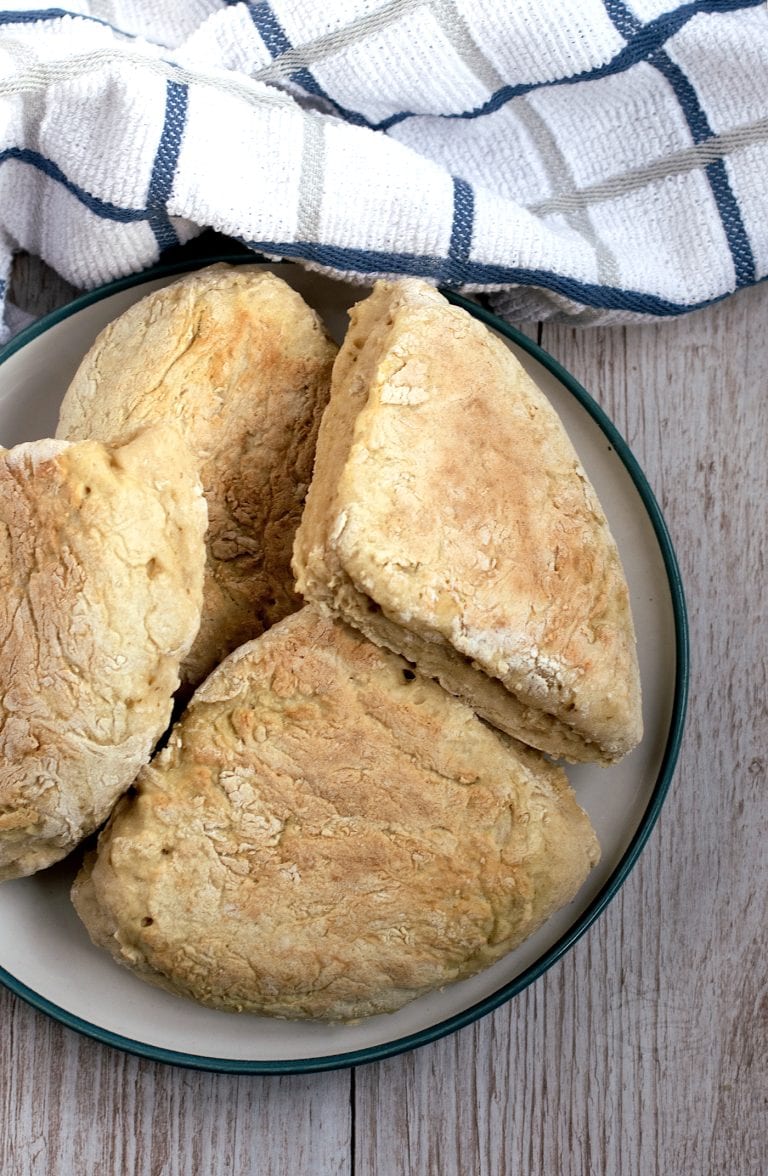
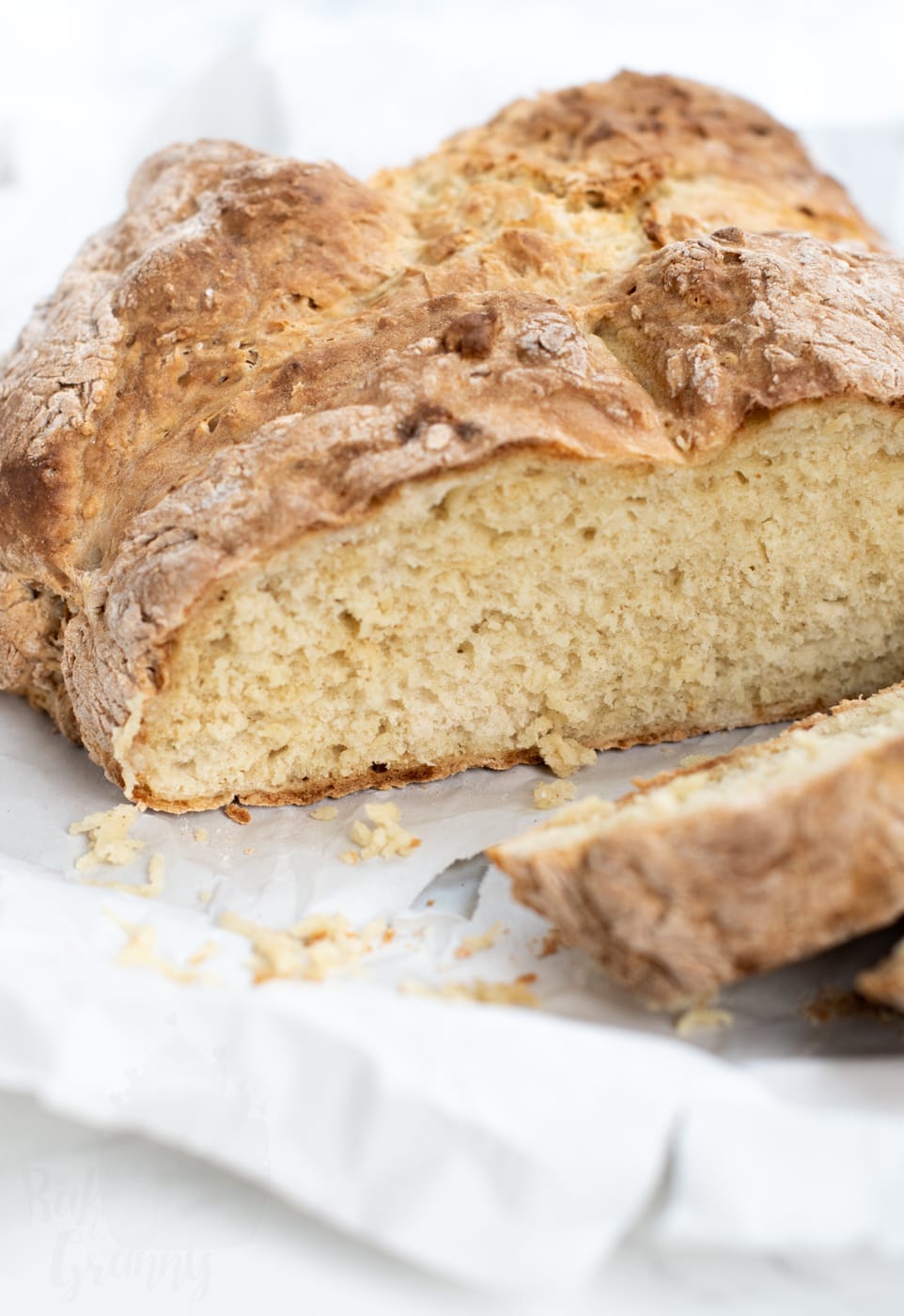
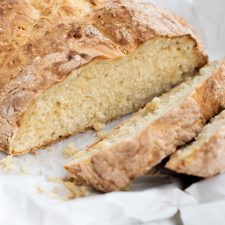
Traditional Irish Soda Bread is one of the easiest breads you can bake at home. Made without yeast and using just a few simple ingredients, it comes together quickly and bakes into a rustic loaf that’s perfect with butter, soup or stew – especially around St Patrick’s Day!
Summarise & Save this Recipe on:
Summarise & Save this Recipe on:
Happy St Patrick’s Day! Having shared a couple of Welsh recipes for St David’s Day earlier this month, it seemed only right that I share an Irish recipe for today. And what is a more iconic Irish bake than traditional Soda Bread?
As with our Welsh Cakes and Bara Brith recipes, I was keen to seek advice from some Irish friends before delving too deeply into the world of Soda Bread and claiming to be an expert in a field that isn’t my usual Scottish domain. Lucky for me, I have a good number of Irish friends.
Did you know that 90% of optometrists working in Scotland are from Ireland? Ok, that’s maybe not a fact (it might be!), but from my experience working in optics for nearly a decade, I can honestly say that the overwhelming majority of optometrists I worked with grew up in Ireland. And they are the sole reason for me now overusing the word “grand”.
Despite not having worked with eyes in 5 years (!!) now, I still keep in contact with a good few of them, a couple of whom were more than happy to assist with my Irish Soda Bread questions.
But first of all…
What is Soda Bread?
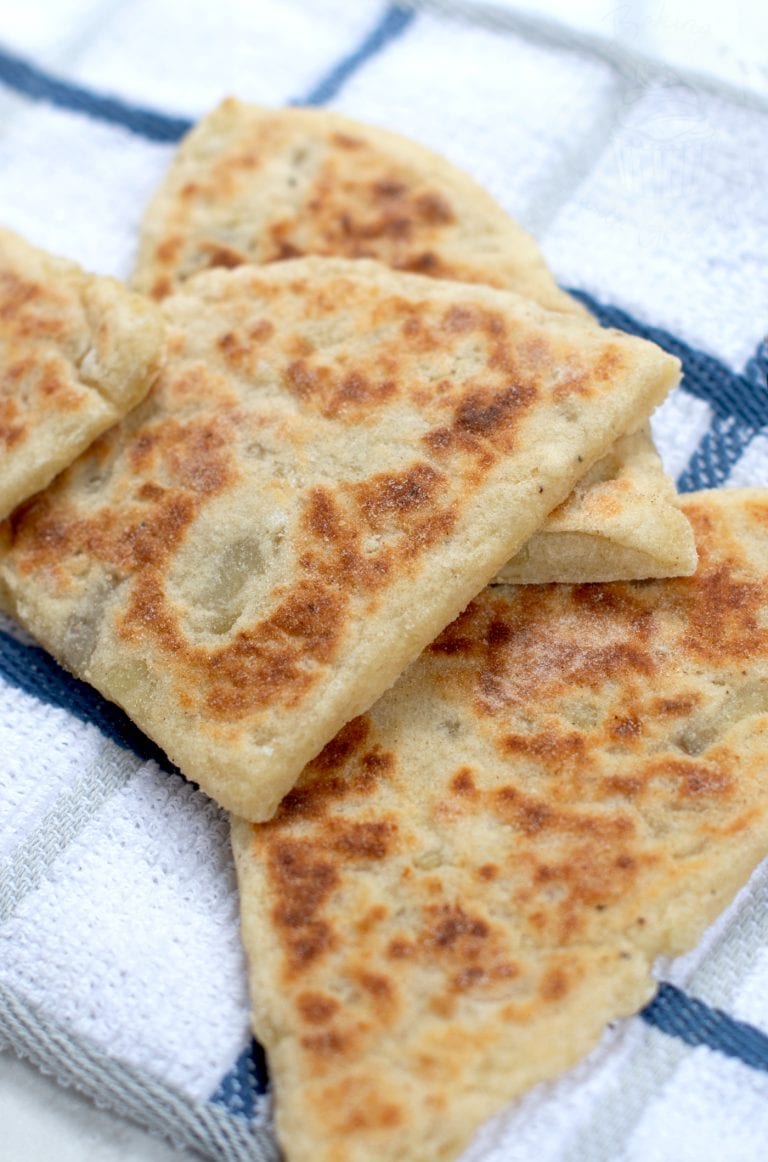
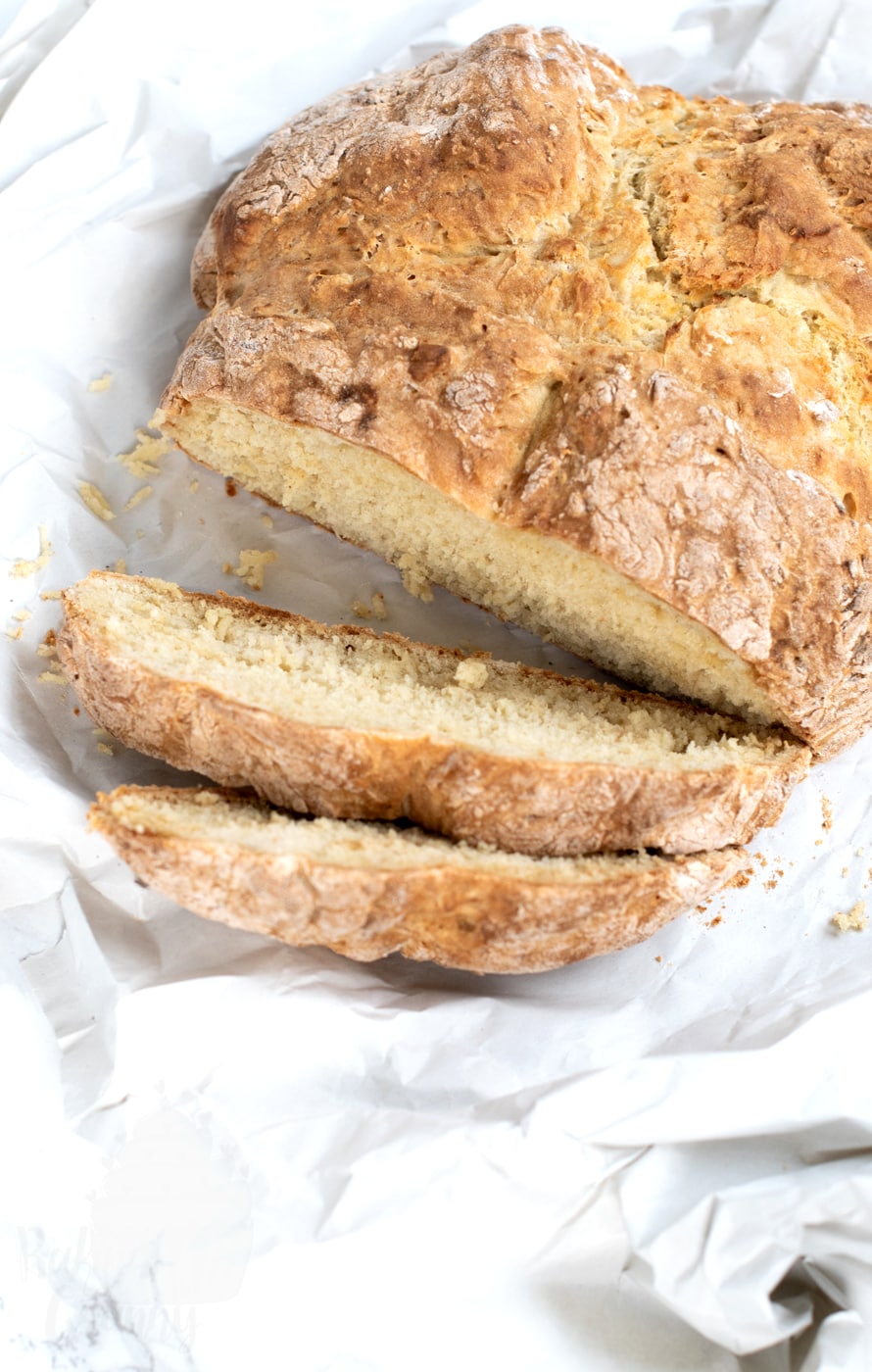
Soda Bread is a traditional Irish bread made without yeast, using just a few ingredients and no kneading, so it can be made and baked in as little as 40 minutes [total time]. A similar dough is also used to make Soda Farls, which are traditionally cooked on a griddle rather than baked in the oven.
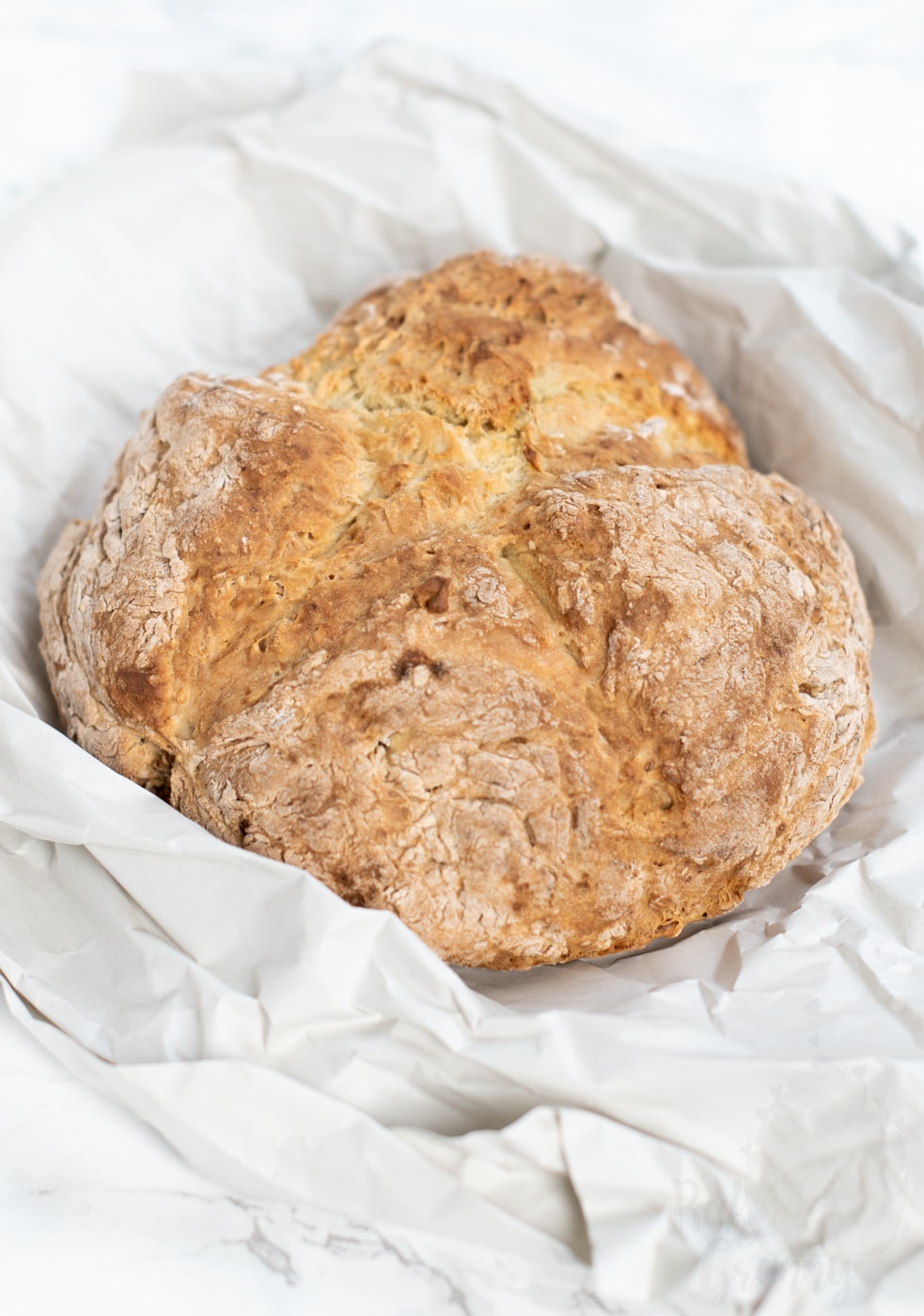
Unlike yeast breads, this easy Soda Bread relies on the reaction between the bicarbonate of soda and the acid in the buttermilk to give it its rise and familiar flavour. And most soda bread loaves are scored with a cross on top before baking. This helps the heat reach the centre of the dough so it bakes evenly.
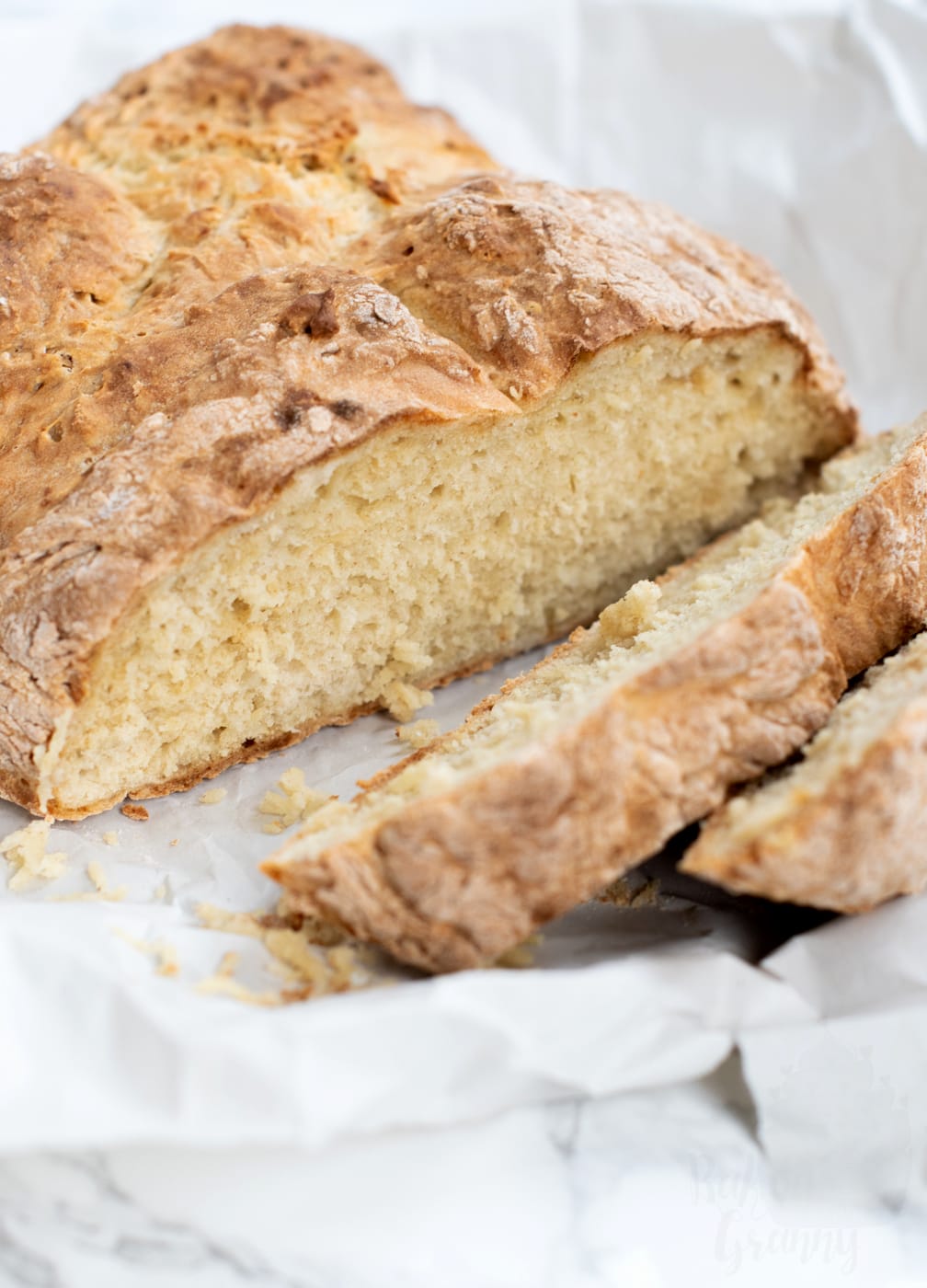
In terms of texture, it is quite a dense bread and slightly chewy. It has a crunchy crust when freshly baked, but if stored in an airtight container or wrapped in cling film, it quickly softens. Soda bread is perhaps not a go-to for sandwiches, but it is perfect for toast or to accompany a bowl of soup. Or, of course, simply sliced thick and slathered in butter!
Do raisins belong in Soda Bread?
Or sultanas. Or any dried fruit additions for that matter. Some variations of soda bread include dried fruit, sometimes called Irish soda bread with raisins or spotted dog. But I consulted my go-to Ireland experts for their opinion on the matter
One, who is a bit of a soda bread connoisseur and who, despite living in Scotland for well over a decade, still has a loaf of Soda Bread sent over to her every month, was quick to say a prompt no to raisins.
The other, who is quite literally the most Irish person I have ever had the pleasure of knowing, offered us some stellar advice…
“If in doubt, raisins out.“
So there you have it. Straight from two Irish optometrists. One from Northern Ireland, one from Ireland (if that makes any difference…?). Both agree that Irish Soda Bread doesn’t have raisins. No judgement from me, a Scottish lass, should you wish to add a handful to yours, though. Potentially judgment from them, though. In fact, definitely judgment from one. That’s just who he is.
Soda Bread has always been one of those simple recipes that feel almost foolproof. With no yeast and very little mixing involved, it’s the sort of loaf anyone can bake – even if you’re new to making bread at home. And if you’re looking for more simple bread recipes, my Easy White Bread is another great beginner-friendly loaf.
Ingredients for Irish Soda Bread:
Plain Flour
Plain flour forms the base of the dough. Because soda bread uses bicarbonate of soda instead of yeast, plain flour is used rather than self-raising flour.
Bicarbonate of Soda
Bicarbonate of soda is the raising agent in soda bread. When it reacts with the acidity in the buttermilk, it creates bubbles that help the bread rise as it bakes. The bicarbonate of soda is also where traditional Soda Bread gets its name, of course.
Salt
Salt enhances the flavour of the bread and balances the tang from the buttermilk.
Buttermilk
If we’re going for a traditional soda bread, it has to be buttermilk. Buttermilk provides the acidity needed to activate the bicarbonate of soda. It also gives soda bread its soft texture and slightly tangy flavour.
If, however, you can’t get hold of buttermilk, or you want the option to make it without, you can make a quick substitute by adding 1 tablespoon of lemon juice or vinegar to milk (dairy or soya works best) and leaving it for 30 minutes before using. I would always recommend using slightly less milk in this instance, as buttermilk tends to be naturally thicker. See the recipe notes for more info.
Free-from & Vegan
Gluten-Free: I haven’t tried making this recipe into a gluten-free Soda Bread, but in theory, you should be able to substitute the flour with a gluten-free flour. If you do give it a try, let me know how you get on!
Nut-free: There are no nuts in this Soda Bread recipe, but be sure to double-check your ingredients for any hidden nuts.
Egg-free: There are no eggs used in this recipe, but be sure to check your individual ingredients for any hidden eggs.
Dairy-free: To make this Soda Bread dairy-free, use 250ml of your dairy-free milk of choice (in place of the buttermilk in the recipe), mixed with 1 tbsp of apple cider vinegar or 1tbsp lemon juice. Prepare your milk mixture about 30 minutes in advance to allow it to thicken ever so slightly.
Vegan: As above, to make this a Vegan Soda Bread, use 250ml of your dairy-free milk of choice (in place of the buttermilk in the recipe), mixed with 1 tbsp of apple cider vinegar or 1tbsp lemon juice. Prepare your milk mixture about 30 minutes in advance to allow it to thicken ever so slightly.
N.B. Any advice or suggestions to make recipes “free-from” or vegan are purely that – suggestions. Please be careful to double-check all ingredients individually, taking extra caution when serving to those with allergies & intolerances.
For more info on common food allergies, please see food.gov.uk | For more info on coeliac disease, please see coeliac.org.uk | For more info on a vegan diet, please see vegansociety.com
Tips for easy Irish Soda Bread:
- Handle the Dough Lightly: Much like scones, soda bread needs a light touch. Avoid overworking the dough, or you’ll knock out the air before it has a chance to bake. Mix only until everything just comes together.
- Don’t Add Too Much Flour When Shaping: Soda bread dough should be soft and slightly sticky. Adding too much flour while shaping can make the finished loaf dense and dry. If you find your dough is too sticky to work with, add a little less buttermilk next time.
- Score a Deep Cross in the Top: Some people assume that the cross cut into the top of your loaf has religious connotations, but that’s not the case – it’s simply to aid in the rising and baking of your bread. The cross cut into the loaf helps the heat reach the centre of the dough, so the bread bakes evenly. Without it, the outside can bake too quickly while the middle stays doughy. Use a sharp knife and cut a fairly deep cross for best results.
- Bake as Soon as the Dough is Mixed: Once the bicarbonate of soda reacts with the buttermilk, it starts working straight away. For the best rise, shape the dough, cut your cross and get it into the oven without delay.
- Let it Cool Before Slicing: Try to leave your soda bread to cool for about 30 minutes before cutting into it. Slicing too soon can cause the loaf to collapse and may make it seem under-baked.
Soda Bread FAQs
Soda Bread is a traditional Irish bread made without yeast. Instead of yeast, it uses bicarbonate of soda and buttermilk to create its rise, resulting in a quick and easy loaf with a slightly dense texture and rustic crust.
Soda Bread gets its name from the bicarbonate of soda used as the raising agent. When the bicarbonate of soda reacts with the acidity in the buttermilk, it creates bubbles that help the bread rise as it bakes.
Despite some people’s belief, it is not due to religious connotations. Cutting a cross into the top of the dough helps the heat reach the centre of the loaf so it bakes evenly. Without it, the outside of the bread may cook too quickly while the middle remains doughy. Or, as some people have shared, it lets the fairies escape!
Yes! If you don’t have buttermilk, you can make a quick substitute by adding 1 tablespoon of lemon juice or white vinegar to milk and leaving it to sit for about 30 minutes before using. Just be sure to add the milk gradually in this case, as you may not need it all.
More Irish Favourites
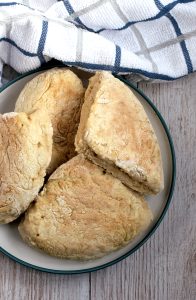
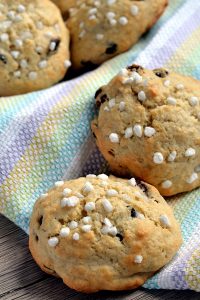
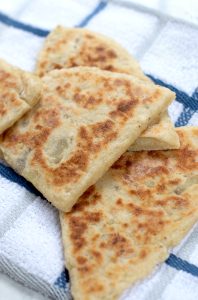
If you loved this traditional Soda Bread, here are some more of my favourite Irish baking recipes for you to try next:

Save this recipe!
Want to save this recipe for later? Pop your email below and come back to it when you’re ready to bake.
Irish Soda Bread
INGREDIENTS
- 320 g Plain Flour
- 1 tsp Bicarbonate of Soda
- 1 tsp Ground Sea Salt
- 300 ml Buttermilk (see notes for alternative)
EQUIPMENT
INSTRUCTIONS
- Preheat your oven to 200°C (190°C for fan-assisted ovens, Gas Mark 6 or 400°F). Line a
baking tray withgreaseproof paper and set aside. - Sift the flour,
bicarbonate of soda and salt into a large bowl. Make a well in the middle before pouring in the buttermilk. - Gently stir together, being cautious not to mix too vigorously. Once the wet and dry ingredients have started to come together and you can no longer mix with a spoon/spatula, use your hand to form it into a soft, slightly sticky dough.
- Turn the dough onto a well-floured surface and very gently knead it into a loose ball – try not to knead it more than 2-4 turns to do this.
- Gently lift the ball of dough onto your pre-lined
baking tray . Gently press to flatten a little before cutting a cross over the top of your soda bread. - Bake in your preheated oven for about 30 minutes, until golden brown.
- Allow your loaf to cool for at least 30 minutes before slicing.
IMPORTANT NOTE:
All my recipes are developed using a digital scale and the metric system (grams and millilitres). Cup measurements are available as a conversion, but these, unfortunately, won’t always be as accurate. For best results, I always recommend baking with a digital scale.
RECIPE NOTES:
Substitutions:
- Buttermilk: If you are unable to get buttermilk locally or would prefer a dairy-free option, simply replace the buttermilk with 250ml of milk mixed with 1 tbsp of apple cider vinegar or 1 tbsp lemon juice. Mix about 30 minutes before use to allow the milk to thicken ever so slightly. Be sure to add the milk gradually, as you may not need it all.
- Flour: Traditional soda bread is made with plain white flour (all-purpose flour), but you can try substituting some of the flour with wholemeal flour for a slightly nuttier flavour and denser loaf.