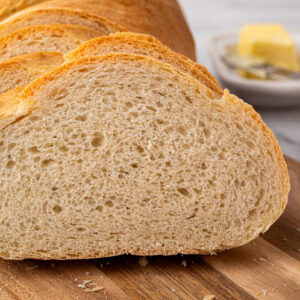
Easy Bread
A simple, reliable homemade bread recipe made with basic store-cupboard ingredients. This easy white loaf requires no bread maker or stand mixer and can be adapted for rolls, pizza bases, or different flour types.
PRINT RECIPE
Servings: 1 loaf
INGREDIENTS
- 500 g Strong White Flour
- 7 g Easy Bake Instant Yeast (usually 1 sachet)
- 2 tsp Sea Salt
- 3 tbsp Butter/Margarine/Oil (whichever you prefer)
- 300 ml Warm Water
EQUIPMENT
INSTRUCTIONS
- In a large bowl, add the flour, yeast and salt and mix to combine. Make a well in the middle of the mixture and add the butter/margarine/oil and warm water. Mix to combine, adding a little more water if required, and using your hands to bring it together into a soft, lumpy, slightly sticky dough.
- Turn the dough out onto a floured surface and knead for around 10 minutes, until the dough is smooth and elastic.
- Place the dough in an oiled bowl and cover with a piece of oiled
cling film or a damp tea towel. Allow the dough to rise for at least 1 hour, or until it has doubled in size. - Line a
baking tray with somegreaseproof paper and set aside. Knock back the dough (by gently punching the air from the dough and pulling it back on itself) before forming it into your desired loaf shape. - Place the loaf onto your prepared
baking tray (covering again with the oiledcling film or damp tea towel) and leave to prove for a further 1 hour, or until the dough has doubled in size.Preheat your oven to 220°C (200°C for fan-assisted ovens, Gas Mark 7 or 425°F). - Before baking, with a sharp knife, add a few scores to the top of your bread to allow it to expand while it bakes. Bake for 25-30 minutes until golden brown, and the loaf sounds hollow when tapped underneath
- Leave to cool on a wire cooling rack before slicing.
IMPORTANT NOTE:
All my recipes are developed using a digital scale and the metric system (grams and millilitres). Cup measurements are available as a conversion, but these, unfortunately, won't always be as accurate. For best results, I always recommend baking with a digital scale.
RECIPE NOTES:
Flour Swaps: Strong white bread flour gives the best structure and rise, but plain flour can be used. If using plain flour, knead the dough for a little longer to help develop the gluten. Wholemeal flour can also be used, though the finished loaf will be slightly denser. A 50/50 mix of white and wholemeal flour works well.
Substitutions:
- Salt: Sea salt gives the best flavour. If using standard table salt, reduce the quantity slightly, as it can make the bread taste overly salty. Salt is essential for flavour and for controlling the yeast, so it's best not to skip it.
- Fat options: Adding butter, margarine, or oil helps soften the crumb and improves keeping quality. Margarine or oil keeps the loaf suitable for vegans.
LIKE THIS RECIPE?
Leave a comment and rating below!