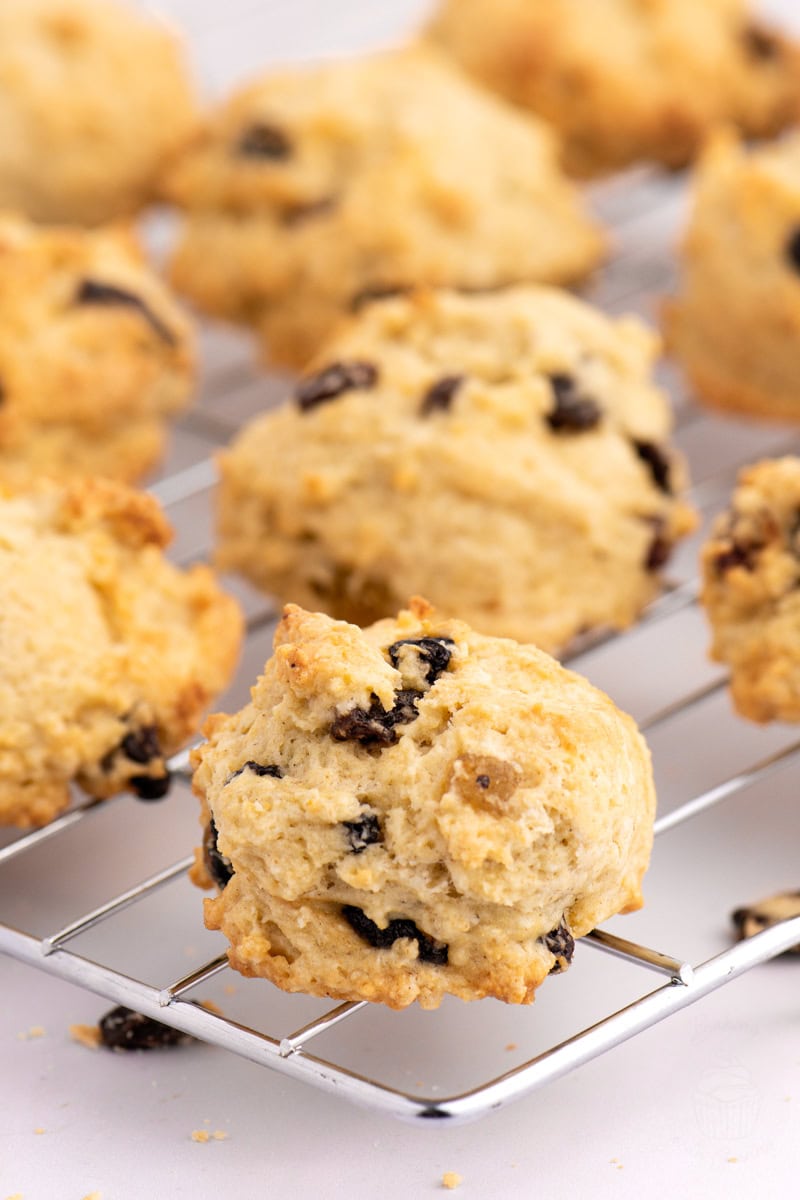
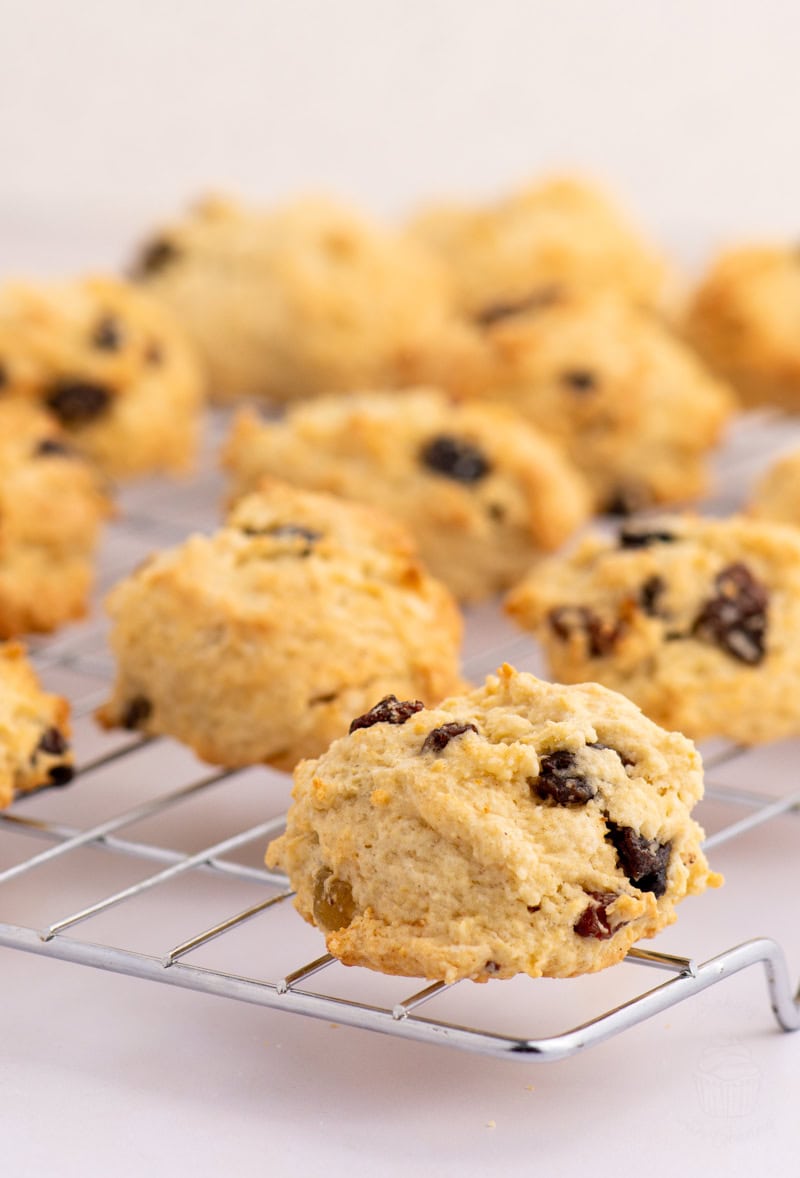
Rock Buns, sometimes known as Rock Cakes, are a classic Scottish bake with a rough, rocky texture and plenty of dried fruit. One recipe that everyone remembers from baking lessons at school.
Summarise & Save this Recipe on:
Summarise & Save this Recipe on:
It was actually one of my lovely followers who’d requested this recipe, and of course, my Mum had her go-to Rock Bun recipe right on cue! I’m pretty sure prior to this, the last time I made Rock Buns was in my High School Home Economics class, alongside Pineapple Upside-down Cake and Chewy Flapjack, and I’m pretty sure they were more rock than they were bun.
Given my sketchy history with baking Rock Buns, I was unsure of my actual opinion of them. They shouldn’t actually break your teeth, like the H.E. Rock Bun disaster of 2001, should they?
I mean, sure, they’re called Rock Buns, but why would anyone choose to eat something so tough? Turns out those ‘Rock Buns’ (inverted commas, as I think it’s a stretch to actually call them so) were so burnt over-baked, and probably made from not-the-best recipe, like most recipes our school produced.
Anyway, it turns out, I love Rock Buns! It wasn’t until my Mum compared them to scones – like my easy Fruit Scones, Plain Scones or Cherry Scones – that I thought there was a chance they were something I could get on board with.
So if you love crumbly little cakes, loaded with flavour and dried fruit, then give Rock Buns a chance – you won’t be disappointed with this recipe! (As long as you don’t burn them and end up with literal H.E.-esque rocks). And take it from me, you’ll love them most of all when they’re still a little warm and fresh from the oven.
I most certainly did not eat 3 in one sitting… Ahem…
Free-from & Vegan
Gluten-free Options:
Swap the self-raising flour for a good-quality gluten-free self-raising blend. And add ½ tsp xanthan gum if your flour doesn’t already contain it. Sometimes gluten-free flours can also be a little drier, so you may need to add a little more milk.
Nut-free Adjustments:
This recipe contains no nuts, but as always, be sure to double-check the allergen lists for your individual ingredients.
Dairy-free Swaps:
To make these dairy-free Rock Buns, simply use a dairy-free block margarine instead of butter.
Egg-Free Adaptations:
To make these egg-free Rock Cakes, you can try replacing the egg with a flaxseed “egg” (1 tbsp ground flaxseed mixed with 2½ tbsp water, left to thicken). This may alter the flavour and texture slightly but not in an unpleasant way.
Vegan Substitutions:
To make these vegan Rock Buns, simply use both the dairy-free and egg-free substitutions above.
Allergy Disclaimer & Resources:
Any advice or suggestions to make recipes “free-from” or vegan are purely suggestions. Please double-check all packaged ingredients individually, taking extra caution when baking for those with allergies or intolerances.
For official guidance on food allergies, please see Food Standards Agency (food.gov.uk) | For more info on coeliac disease, please see Coeliac UK (coeliac.org.uk) | For more info on a vegan diet, please see The Vegan Society (vegansociety.com)
Top Tips for Rock Buns:
• Use Cold Butter or Block Margarine: Rub in your butter/margarine straight from the fridge. This gives the mixture that fine breadcrumb texture, which lends to the classic crumbly “rock” finish.
• Mix Gently: Once the egg and milk go in, stir only until the dough comes together. Overmixing will make your Rock Buns heavy and actually rock-like, instead of light and tasty.
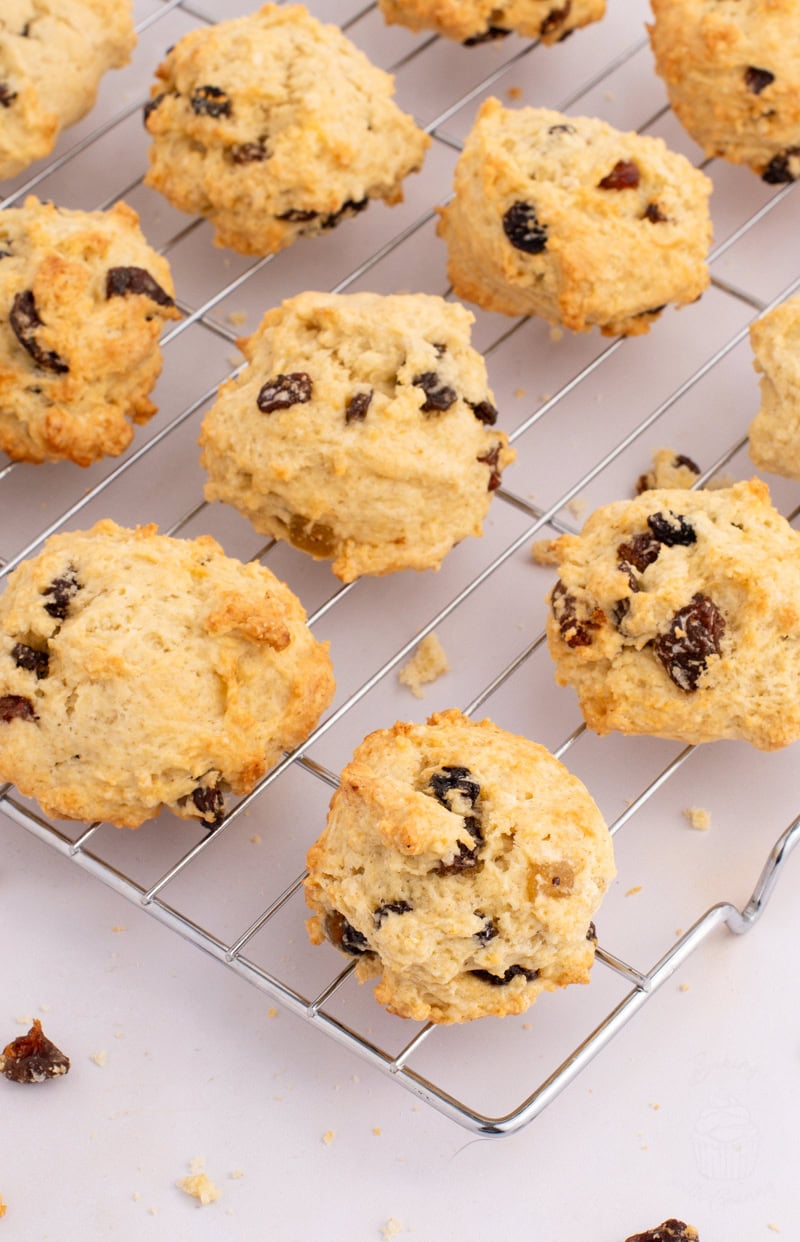
• Keep Them Rustic: Don’t smooth them down! Rock Buns should look rough and rocky.
• Watch for the Golden Colour: Bake until just golden on top. That way you get a crisp outside and a soft, slightly crumbly middle. Nothing will make a Rock Bun more rock-like than overbaking them.
• Best Eaten Fresh: Rock Buns are at their best on the day they’re baked, when they’re still crisp on the edges but still tender on the inside.
Rock Buns FAQs
Rock Buns (sometimes called Rock Cakes) are small, rustic fruit buns made with flour, butter or margarine, sugar, egg, and milk. They get their name from their rough appearance, which looks like wee rocks.
I like to use a ready-made bag of mixed dried fruit, which is usually raisins, sultanas, currants and mixed peel, and gives a nice balance of flavours. You can stick with that or use your own combination of any dried fruits.
Rock Buns, or Rock Cakes, are a traditional Scottish and British bake. They became especially popular during World War II, when rationing made simple & thrifty recipes a necessity. Their rough, “rocky” look and easy-to-make method have since made them a staple in school cookery lessons.
More Classic Buns
If you loved these traditional Rock Buns, here are some more of my favourite bun recipes for you to try next:


Save this recipe!
Want to save this recipe for later? Pop your email below and come back to it when you’re ready to bake.

Rock Buns
INGREDIENTS
- 250 g Self-raising Flour (see Self-raising Flour note below)
- 65 g Block Margarine or Butter (cold; cubed; plus extra for dusting)
- 70 g Caster Sugar
- 1 Free-range Egg (at room temperature; see Egg Size note below)
- 2-3 tbsp Milk
- 1 tsp Orange Extract
- 100 g Dried Mixed Fruit (sultanans, raisins, currants, mixed peel…)
EQUIPMENT
INSTRUCTIONS
- Preheat your oven to 190°C (or 170°C for fan-assisted ovens, Gas Mark 5 or 375°F) and grease a couple of
baking trays with some extra butter/margarine. Set aside. - In a large bowl, sift the flour. Add the butter/margarine and rub it together with your fingers until it resembles breadcrumbs.250 g Self-raising Flour; 65 g Block Margarine or Butter
- Add the sugar and egg to the mixture. Add the milk a spoonful at a time, mixing together to create a thick, sticky dough – you may not need all the milk.70 g Caster Sugar; 1 Free-range Egg; 2-3 tbsp Milk
- Add the orange extract and the mixed dried fruit. Mix gently until the dried fruit is evenly dispersed throughout the dough.1 tsp Orange Extract; 100 g Dried Mixed Fruit
- Place a tablespoon-sized amount of dough onto your pre-greased
baking trays . Repeat with the rest of the dough, leaving space between each ball. - Bake in your pre-heated oven for around 10-15 minutes, until they have a nice golden colour.
- Allow to cool a little on the
baking trays before transferring to a wire rack to cool completely. However, rock buns are best enjoyed when still a little warm, fresh from the oven!
IMPORTANT NOTE:
All my recipes are developed using a digital scale and the metric system (grams and millilitres). Cup measurements are available as a conversion, but these, unfortunately, won’t always be as accurate. For best results, I always recommend baking with a digital scale.
RECIPE NOTES:
Substitutions:
- Fruit: You can use mixed dried fruit as per the recipe, or swap for your own combination of sultanas, currants, raisins, mixed peel… Or whatever combo of dried fruits you prefer.
- Extracts: Orange extract gives a lovely flavour, but lemon or vanilla can also be used if preferred.
- Sugar: Caster sugar (superfine sugar) works best for a light texture, but golden caster sugar can be used if you prefer a less-sweet, more caramel flavour. See my Caster Sugar Ingredient Guide for more information on cup conversions, substitutions and where to buy it.