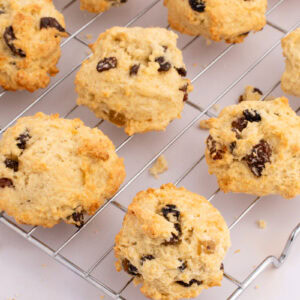
Rock Buns
Perhaps most famous for being the bake everyone made in Home Economics, Rock Buns are a delicious tea time treat.
PRINT RECIPE
Servings: 12 buns
INGREDIENTS
- 250 g Self-raising Flour (see Self-raising Flour note below)
- 65 g Block Margarine or Butter (cold; cubed; plus extra for dusting)
- 70 g Caster Sugar
- 1 Free-range Egg (at room temperature; see Egg Size note below)
- 2-3 tbsp Milk
- 1 tsp Orange Extract
- 100 g Dried Mixed Fruit (sultanans, raisins, currants, mixed peel...)
EQUIPMENT
INSTRUCTIONS
- Preheat your oven to 190°C (or 170°C for fan-assisted ovens, Gas Mark 5 or 375°F) and grease a couple of
baking trays with some extra butter/margarine. Set aside. - In a large bowl, sift the flour. Add the butter/margarine and rub it together with your fingers until it resembles breadcrumbs.250 g Self-raising Flour; 65 g Block Margarine or Butter
- Add the sugar and egg to the mixture. Add the milk a spoonful at a time, mixing together to create a thick, sticky dough - you may not need all the milk.70 g Caster Sugar; 1 Free-range Egg; 2-3 tbsp Milk
- Add the orange extract and the mixed dried fruit. Mix gently until the dried fruit is evenly dispersed throughout the dough.1 tsp Orange Extract; 100 g Dried Mixed Fruit
- Place a tablespoon-sized amount of dough onto your pre-greased
baking trays . Repeat with the rest of the dough, leaving space between each ball. - Bake in your pre-heated oven for around 10-15 minutes, until they have a nice golden colour.
- Allow to cool a little on the
baking trays before transferring to a wire rack to cool completely. However, rock buns are best enjoyed when still a little warm, fresh from the oven!
Don't be concerned with making them neat - the rougher the balls are, the more rock-like your buns will appear.
IMPORTANT NOTE:
All my recipes are developed using a digital scale and the metric system (grams and millilitres). Cup measurements are available as a conversion, but these, unfortunately, won't always be as accurate. For best results, I always recommend baking with a digital scale.
RECIPE NOTES:
Self-raising Flour: Don't have self-raising flour? For this recipe, simply whisk together 250g (1¾ cups plus 1 tablespoon) plain flour and 3¼ teaspoons baking powder instead. If you bake regularly, you can also make a larger batch to keep in your baking cupboard. For full instructions, cup conversions and answers to common questions, see my Self-raising Flour Ingredient Guide.
Egg Size: When it comes to eggs, I always buy mixed-weight free-range eggs. Generally, egg size doesn't make a huge difference in most baking, unless you are using sizes that lean towards the extremes. If you're unsure which eggs to use, I recommend medium eggs in the UK, which are roughly equivalent to large eggs in the US. That's what this recipe has been tested with.
Substitutions:
- Fruit: You can use mixed dried fruit as per the recipe, or swap for your own combination of sultanas, currants, raisins, mixed peel... Or whatever combo of dried fruits you prefer.
- Extracts: Orange extract gives a lovely flavour, but lemon or vanilla can also be used if preferred.
- Sugar: Caster sugar (superfine sugar) works best for a light texture, but golden caster sugar can be used if you prefer a less-sweet, more caramel flavour. See my Caster Sugar Ingredient Guide for more information on cup conversions, substitutions and where to buy it.
Storage:
Rock Buns are best enjoyed on the day they’re baked. They can be stored in an airtight container for 2-3 days, but the texture will change over time.Freezing:
Allow your Rock Buns to cool completely before freezing. Store them in a freezer-safe container or bag for up to 3 months. Defrost at room temperature, and, if you like, you can refresh them in a warm oven for a few minutes.LIKE THIS RECIPE?
Leave a comment and rating below!