
Dundee Cake
Dundee Cake is a true Scottish classic – a light, fruity bake filled with sultanas and citrus, and finished with that unmistakable almond topping. It’s a simpler alternative to rich Christmas cake, making it a lovely choice any time of year.
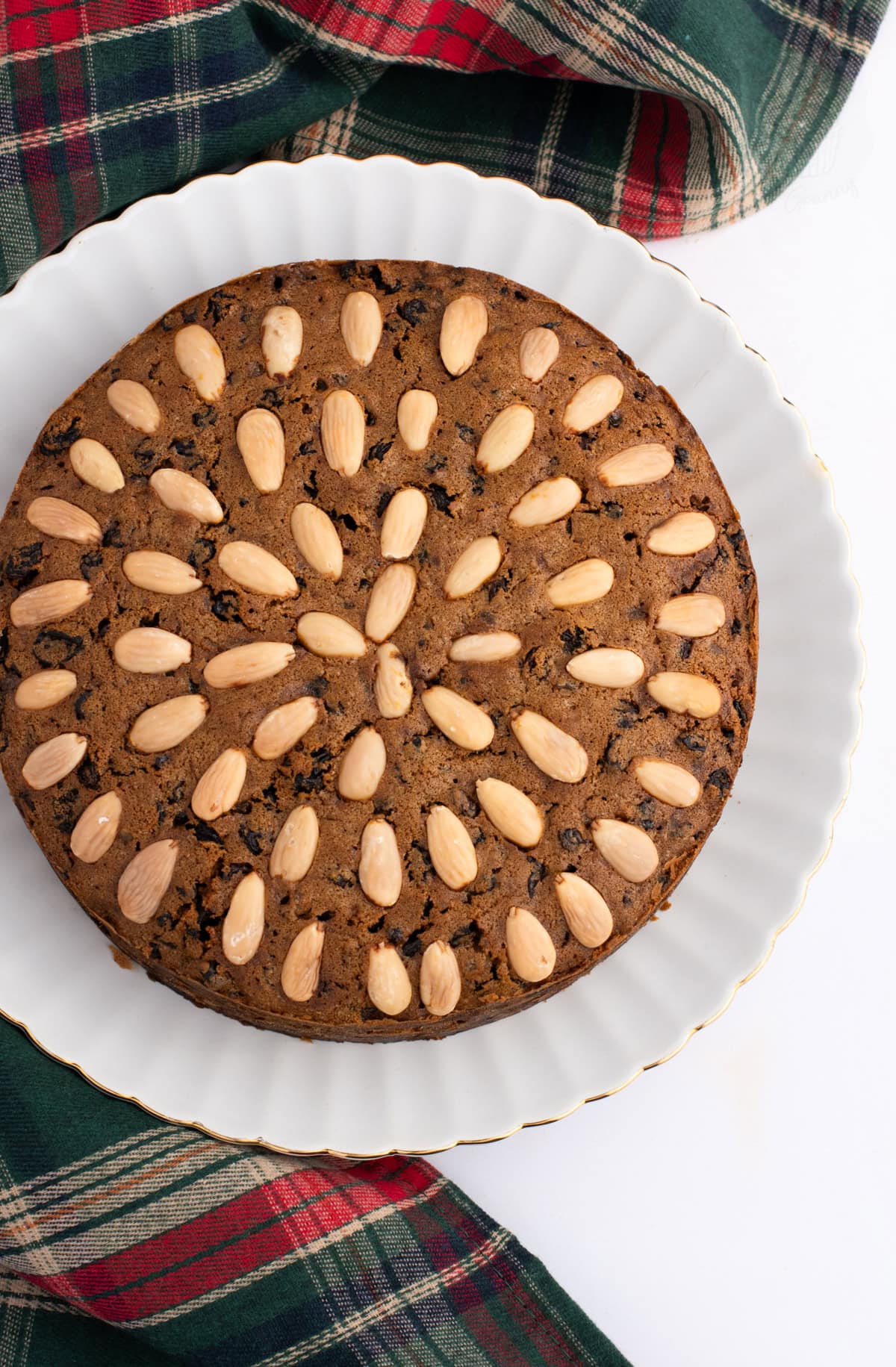
When it comes to cake, I still feel like I’m on a bit of a journey of discovery. Cakes were always what my Mum made when I was growing up, and as such, I never really took to them – too much of a good thing! But since moving away from home, I’ve rediscovered cake in all its glory. The latest to join my all-time favourites is this traditional Dundee Cake.
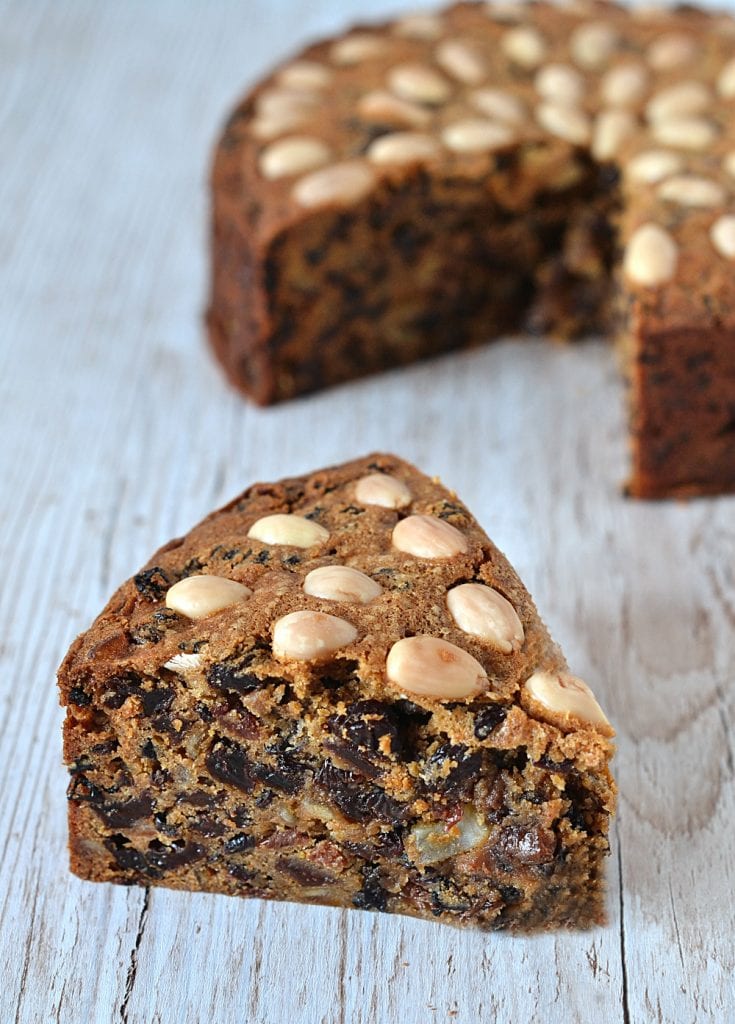
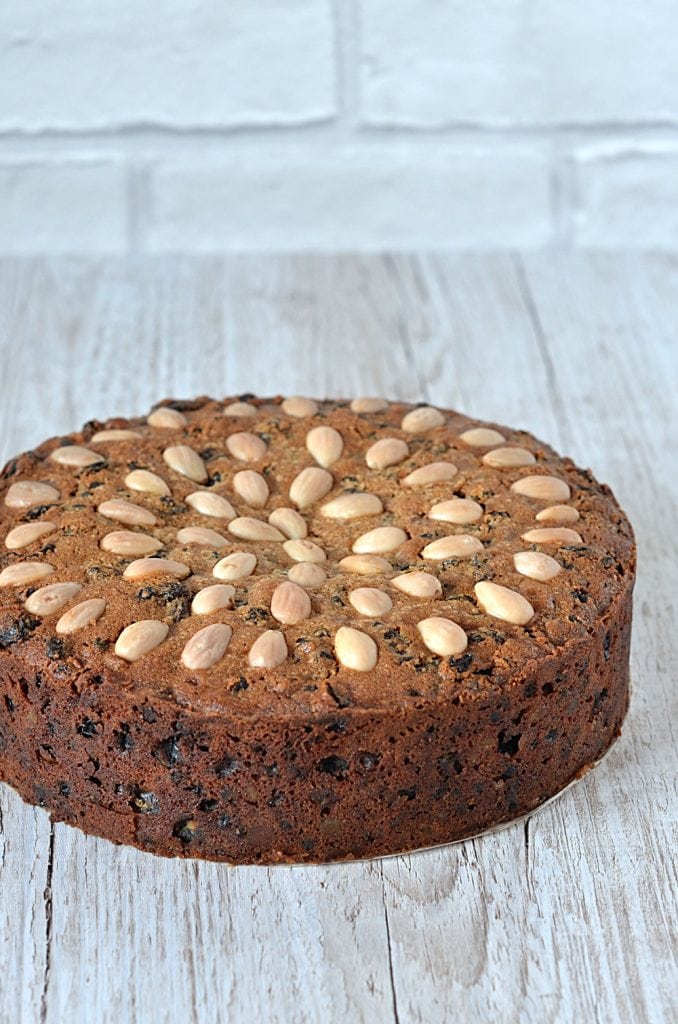
Originating from where its name would suggest, Dundee Cake is a classic Scottish fruit cake, easily recognised by the neat circles of blanched almonds that crown the top. Inside, you’ll find a lovely mix of dried fruits and mixed peel, giving it that distinctive citrus flavour that sets it apart from richer fruit cakes, like a traditional Christmas Cake or Black Bun.
As fruit cakes go, Dundee Cake sits somewhere in the middle. It’s richer than something like a Date and Walnut cake, but lighter and a little less dense than a fully matured Christmas Cake. That makes it a great option if you enjoy a fruit cake but don’t want anything too heavy.
It’s believed Dundee Cake dates back to the 19th century and is said to be the creation of the Keiller family of Dundee (famous for their marmalade), who are said to have invented it as a way to use up leftover orange peel from the production of marmalade. Whether or not that’s entirely true, it certainly explains the citrus notes that are now a signature part of the cake.
Cherries in a Dundee Cake?
In comparison to some other Dundee Cake recipes, you might notice there are no glacé cherries here. This was something my Mum and I discussed at length, and we both agree – a traditional Dundee Cake doesn’t include cherries.
Some recipes have added them over time, but originally, they wouldn’t have been as readily available when the recipe first came about. There’s also the well-known story that Mary Queen of Scots disliked cherries, and that Dundee Cake was adapted to suit her tastes.
Whatever the reason, I leave them out in this recipe – and honestly, you won’t miss them.
Save this recipe!
Want to save this recipe for later? Pop your email below and come back to it when you’re ready to bake.
Dundee Cake
INGREDIENTS
- 50 g Blanched Almonds (approx.)
- 200 g Block Margarine or Butter (softened)
- 200 g Soft Dark Brown Sugar (Dark Brown Sugar)
- 3 Free-range Eggs
- 175 g Currants
- 150 g Raisins
- 150 g Sultanas
- 75 g Dried Mixed Peel (Candied Mixed Peel)
- Zest of 1 Orange
- 200 g Plain Flour (All-purpose Flour)
- 1 tsp Mixed Spice (Pumpkin Spice)
- ½ tsp Salt
EQUIPMENT
INSTRUCTIONS
- Preheat your oven to 150°c (130°c for fan-assisted ovens, Gas Mark 2 or 300°F). Grease and line a round 20cm (8-inch) cake tin with greaseproof paper, and set aside.
- Add your blanched almonds to a bowl of boiling water and set aside to soak.
- In a large bowl, cream the /margarine/butter and sugar until light and fluffy. Add the eggs one at a time, ensuring they are well mixed before adding the next.
- Add the dried fruits, mixed peel & orange zest, and mix all until combined. Sift in the flour, spices and salt, and fold together until you have a thick, fruity batter.
- Transfer the mixture to your prepared tin, smoothing the top. Drain the blanched almonds from the water and arrange them in circles on top of your cake.
- Bake in your pre-heated oven for 2-2½ hours, keeping a close eye – if you think your cake is browning on top too quickly, pop a sheet of tin foil over the top to prevent it from over-baking and cracking.
- Allow to cool completely in the tin. For the best flavour, let the cake mature in an airtight container for a few days before serving.
IMPORTANT NOTE:
All my recipes are developed using a digital scale and the metric system (grams and millilitres). Cup measurements are available as a conversion but these, unfortunately, won’t always be as accurate. For best results, I always recommend baking with a digital scale.
NOTES
Storage:
Once cooled, store your Dundee Cake in an airtight container at room temperature. It will keep well for up to 1 week, and the flavour can even improve after a day or two. Like dense fruit cakes, it can be stored for longer if not cut and wrapped well in clingfilm and tin foil.Freezing:
Dundee Cake freezes well. Allow it to cool completely, then wrap tightly in cling film and foil before freezing for up to 6 months. Defrost at room temperature before serving.Substitutions:
- Dried Fruit: You can easily customise the dried fruit in this Dundee Cake to suit your taste or whatever you have to hand. While currants, raisins, sultanas and mixed peel are traditional, you can use whatever combination you like – just be sure to make it up to the same overall weight in the recipe.
- Sugar: You can use light brown sugar, dark brown sugar, or caster sugar in this recipe. Brown sugars will give a deeper flavour and slightly darker colour. If using caster sugar, keep an eye on your cake as it bakes, as it may brown a little quicker and can catch on the top more easily.
- Mixed Spice: A traditional spice blend easily available in the UK. If you are in the States, pumpkin spice makes a close alternative.
- Adding Cherries: Glacé cherries aren’t traditionally included in a Dundee Cake, but you can add them if you like. If doing so, reduce the overall amount of dried fruit slightly to keep the balance of ingredients in the cake.
Tried this recipe?
Tag @bakingwithgranny or use the hashtag #bakingwithgranny!Dundee Cake is a traditional Scottish fruit cake made with dried fruits, mixed peel and a distinctive topping of blanched almonds arranged in circles. It’s a little lighter and less dense than a traditional British Christmas Cake.
Dundee Cake is made by creaming butter and sugar together, then adding eggs, a mixture of dried fruits and mixed peel, flour and some mixed spice. The fruity batter is then transferred to a tin, topped with blanched almonds in its signature round pattern, and baked until it smells lovely and is firm to the touch.
It’s a simple, traditional fruit cake, but it doesn’t require any soaking or feeding.
Believe it or not, Dundee Cake originates from Dundee in Scotland! It is often linked to the Keiller family, who were famous for their marmalade. It’s believed the cake was created to use up leftover orange peel, which gives it its signature citrus flavour.
Dundee Cake is a lighter fruit cake with fewer spices and no icing, whereas Christmas cake is typically darker, richer, and often covered in marzipan and icing. Dundee Cake is more suited to everyday baking, but it does make a great alternative to traditional Christmas Cake.
No, traditional Dundee Cake does not contain glacé cherries. Some modern recipes add them, but you could argue that they aren’t considered authentic – you can include them if you like, but they aren’t needed.
Free-from & Vegan:
Gluten-free: To make a gluten-free Dundee Cake, you should be able to swap the plain flour for a gluten-free plain flour. I haven’t tested this myself, but I know people have had success with this swap in some of my other cake recipes, so it should hopefully work well here too.
Nut-free: To make a nut-free Dundee Cake, simply leave off the blanched almond topping. You’ll still have a delicious traditional fruit cake, just without the signature finish.
Dairy-free: To make this a dairy-free Dundee Cake, simply use a dairy-free baking margarine instead of butter.
Vegan: To make this a vegan Dundee Cake, you can use a dairy-free baking margarine and try an egg substitute. I haven’t tested the different egg-replacement options, but flaxseed eggs or an aquafaba egg (such as Oggs) should be good options.
N.B. Any advice or suggestions to make recipes “free-from” or vegan are purely that – suggestions. Please be careful to double-check all ingredients individually, taking extra caution when serving to those with allergies & intolerances.
For more info on common food allergies, please see food.gov.uk | For more info on coeliac disease, please see coeliac.org.uk | For more info on a vegan diet, please see vegansociety.com
Originally published in January 2018. Last updated in March 2025.


Tried not troed :(
Haven’t troed this but I love yr site! I love yr recipes! I love yr layout! I love it all!
How long does this cake keep for?
Great recipe for a classic cake. Please note, the famous marmalade making family in Dundee is Keiller, not Kellier.
If the Keiller’s created the recipe to use up leftover orange peel (which does not occur when making marmalade) and did not add cherries to meet the taste of Mary, Queen of Scots, then Mary would have had to have lived a further 200 years than she did. Keiller began producing their marmalade in the 1760s by which time Mary had been dead for 200 years. Marmalade predated the Keillers by about another 200 years at least.
In any good, actually Scottish, recipe, you will find cherries in Dundee cake. However, looking at the above comments it seems few care about authenticity anyway as most want to adulterate our tradition with things which do not belong………………like sugar on porridge.
I think you’re getting history a little mixed up here.
James Keiller and Sons are thought to have been the first company to make Dundee cake commercially, but it’s likely they didn’t invent it – instead they’ll have used a recipe that already existed, possibly modifying it given that traditional dishes tend not to have a fixed recipe.
It’s possible that the original recipe was created for Mary, Queen of Scots, and it’s entirely plausible that she didn’t eat cherries because they were introduced to England by Henry VIII. Cherries aren’t native to Scotland and don’t grow especially well in Scotland, so they would probably have been fairly expensive and not very easy to get hold of.
Marmalade does pre-date James Keiller, although it was originally a quince jelly. Keiller’s innovation was (allegedly) to use Seville Oranges instead. Even that story is disputed, given that Robertson’s have an almost identical one as to how Golden Shred was invented.