Summarise & Save this Recipe on:
Summarise & Save this Recipe on:
Classic Thin and Delicate English Pancakes
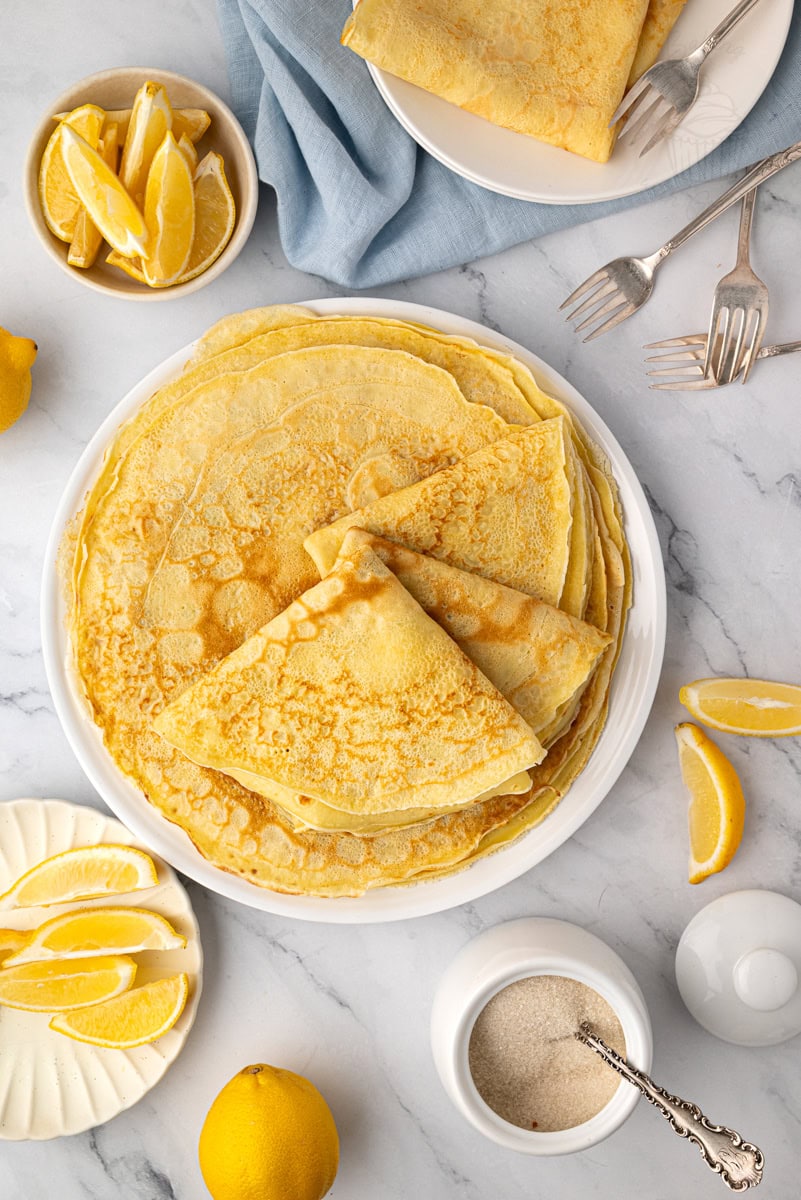
When we talk about pancakes here in the UK, we mean the thin, delicate kind – not the thick, fluffy stacks, topped with butter & syrup. These are traditional British pancakes (often called English pancakes), made from a simple batter of flour, milk and eggs. No raising agents, no fancy ingredients. Just a smooth batter cooked thinly in a frying pan until lightly golden and ready to roll or fold.
They’re much closer to crepes than American pancakes or Scotch Pancakes. Soft, thin and perfect for loading up with toppings, they’ve been a staple in British kitchens for generations – especially on Pancake Day.
Why do we eat Pancakes on Shrove Tuesday?
Pancake Day, also known as Shrove Tuesday, falls on the day before the start of Lent in the Christian calendar. Historically, it was a way to use up rich ingredients like eggs and milk before Ash Wednesday. Pancakes were the obvious answer, being simple, economical and made from ingredients most households already had in the cupboard and wanted to use up to avoid the temptation of eating them during Lent.
The Best Traditional Pancake Toppings
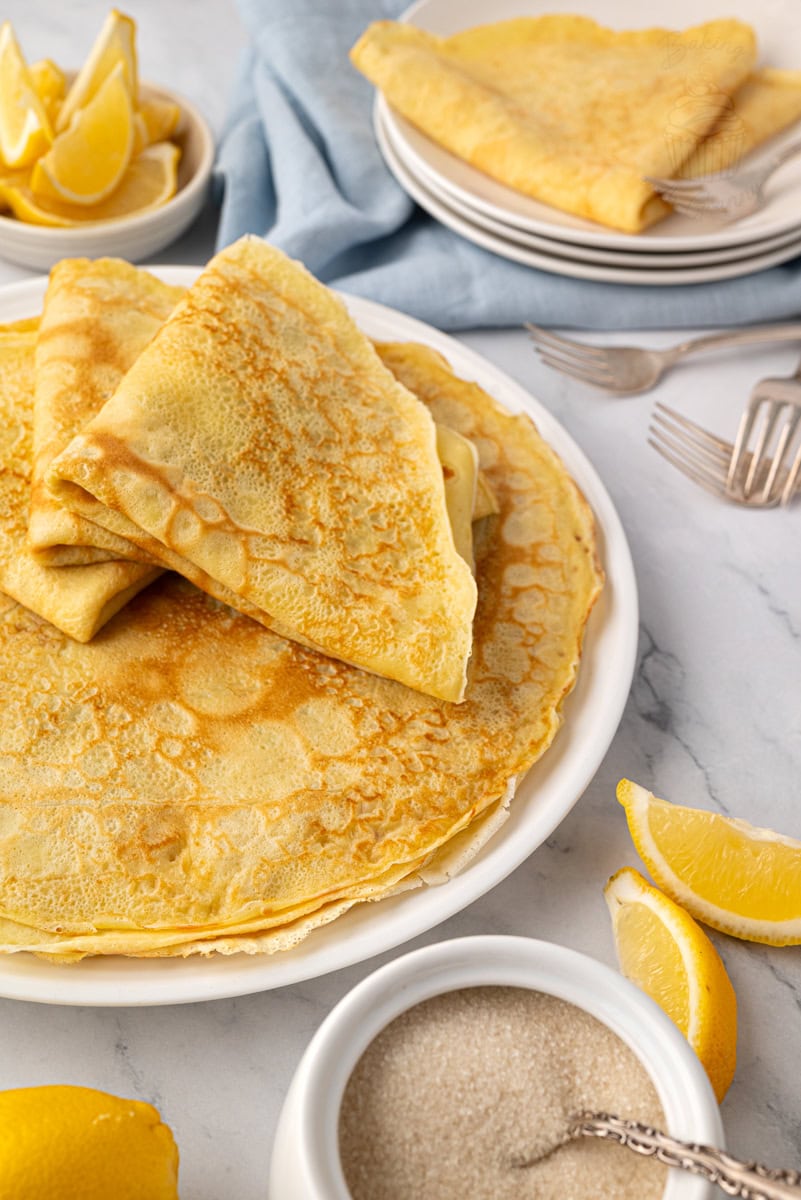
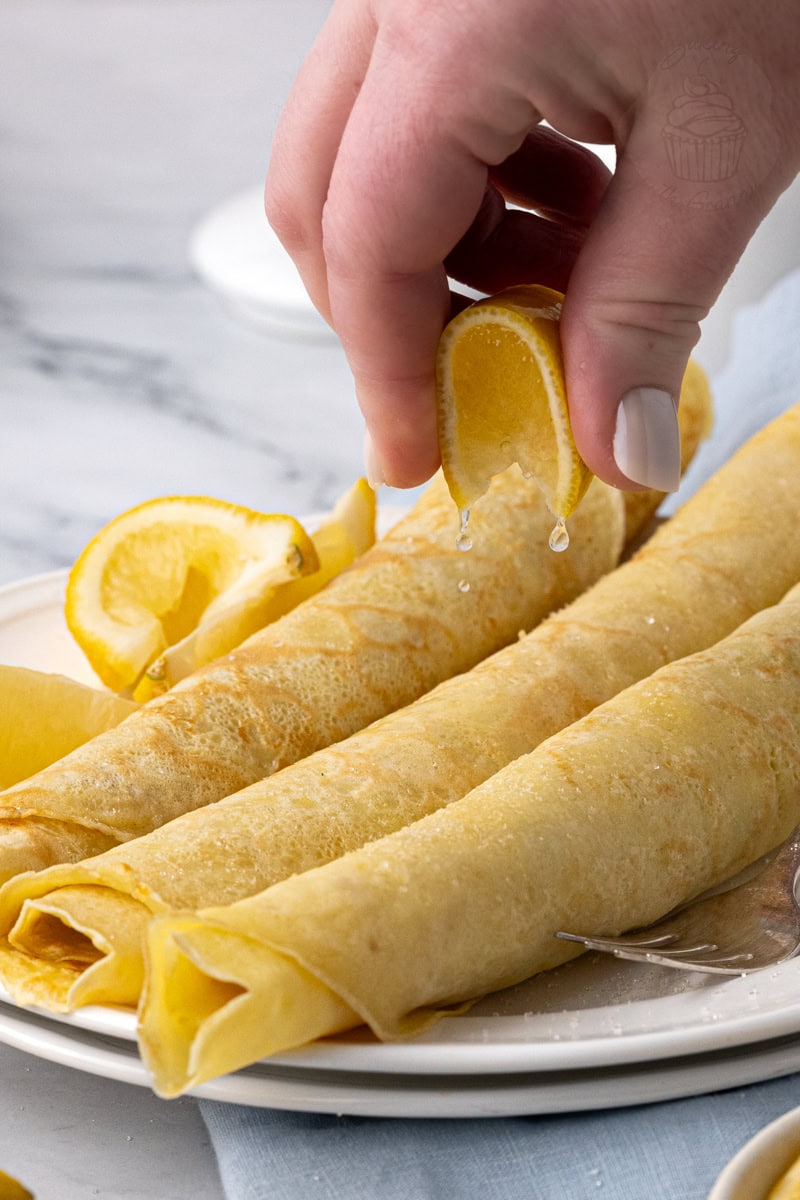
These days, most of us lean far more into the Pancake Day traditions than the religious meaning behind it. It’s about gathering round the kitchen, flipping pancakes (some better than others…), and debating the best toppings. Lemon and sugar is the real classic, with Golden Syrup being another staple choice. Nutella and strawberries are proving popular in recent times, with bacon and maple syrup increasingly making an appearance. And there are those who enjoy a savoury pancake, too – not for me when the sweet options are already so good!
But the recipe itself remains true to its history: plain flour, milk and eggs. That’s it!
Free-from & Vegan
Gluten-free Options:
To make these gluten-free pancakes, you can try swapping the plain flour for a good-quality gluten-free plain flour blend. The texture may be slightly different, and you may need a little extra liquid. I haven’t tested this myself, but if you do, let me know how it turns out!
Nut-free Adjustments:
This recipe contains no nuts, but as always, be sure to double-check the allergen lists for your individual ingredients.
Dairy-free Swaps:
To make these dairy-free pancakes, replace the milk with a plant-based alternative such as oat milk, soya milk or almond milk, and use dairy-free margarine to grease the pan. The flavour may vary slightly depending on the milk used.
Allergy Disclaimer & Resources:
Any advice or suggestions to make recipes “free-from” or vegan are purely suggestions. Please double-check all packaged ingredients individually, taking extra caution when baking for those with allergies or intolerances.
For official guidance on food allergies, please see Food Standards Agency (food.gov.uk) | For more info on coeliac disease, please see Coeliac UK (coeliac.org.uk) | For more info on a vegan diet, please see The Vegan Society (vegansociety.com)
Tips for Shrove Tuesday Pancakes:
- Rest the batter: Resting after mixing allows the flour to fully hydrate and the gluten to relax, which gives you smoother, softer pancakes. If you’ve got the time, an hour is best. Or, even better, make the batter the night before, pop it in the fridge (covered), and make your pancakes in the morning – just give the batter a light stir to mix any natural separation.
In a rush? Even 10 minutes rest helps. - The batter should be thin and pourable: British pancake batter is much thinner than American pancake batter. It should coat the back of a spoon but still run off easily. If it feels thick, add a splash more of milk or water.
- The first pancake is a tester: Don’t judge the whole batch on pancake number one! The pan temperature usually settles after the first, so use it as your “practice flip” and don’t be disheartened if it’s not perfect first time.
- Use a medium heat – not high: Too hot and they’ll brown too quickly and turn rubbery. Too low and they won’t colour properly. Medium heat gives you that classic golden lacy pattern. Again, it may take a pancake or two to get the ideal temperature sussed.
- Swirl in the pan quickly: As soon as the batter hits the pan, lift and tilt the pan in a circular motion so the batter reaches the edges. British pancakes are meant to be thin, round and pan-sized.
- Lightly grease between batches: A quick brush of butter/margarine between every pancake prevents sticking and keeps them even and golden.
- Keep them warm: Stack the cooked pancakes on a clean tea towel and lightly wrap them. This will keep them warm but also stop them from crisping up too much.
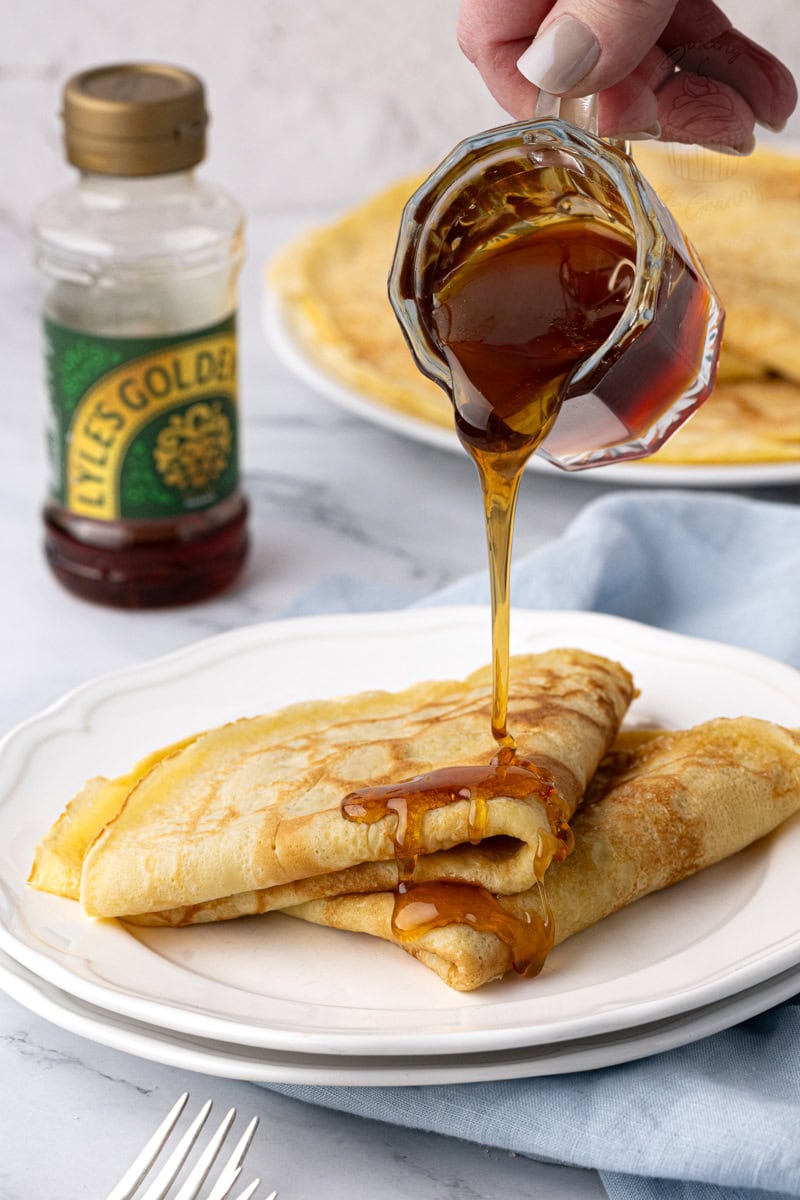
With thanks to Naomi Seiler for creating these photos.
Pancakes FAQs
British pancakes (also called English pancakes) are thin, crepe-like pancakes made from flour, milk and eggs. Unlike American pancakes or Scotch pancakes, they don’t contain any raising agent, which keeps them flat, soft and flexible – perfect for rolling or folding with sweet or (savoury!) toppings.
British pancakes are thin and delicate, similar to French crepes. American pancakes are thicker, fluffier and made with baking powder (baking soda) to help them rise. British pancakes are traditionally served with lemon and sugar on Pancake Day, while American pancakes are often stacked and topped with maple syrup and butter.
Pancake Day, also known as Shrove Tuesday, falls on the day before Lent begins. Historically, it was a way to use up rich ingredients like eggs and milk before Lent, and pancakes were a simple way to do that.
Don’t panic – it often starts that way! Whisking gradually and adding the liquid slowly helps prevent lumps. Just keep whisking until there are no lumps – if this takes a while, try to let the batter rest for a reasonable time to compensate for the extra whisking.
Rubbery pancakes are usually the result of overcooking or cooking on too high a heat. Keep your pan at a steady medium heat and cook until slightly crispy on the edges and just until lightly golden on each side.
Save this recipe!
Want to save this recipe for later? Pop your email below and come back to it when you’re ready to bake.
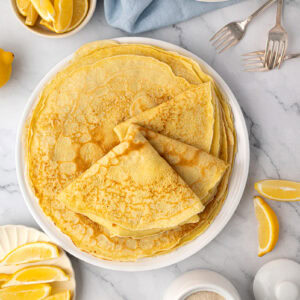
English Pancakes
INGREDIENTS
- 220 g Plain Flour
- 400 ml Milk (dairy, soya, oat…)
- 100 ml Water
- 2 Free-range Eggs (at room temperature; see Egg Size note below)
INSTRUCTIONS
- Sift the flour into your bowl, holding it at a bit of height to allow some air into the flour.
- Mix the milk and water together. Make a well in the middle of the flour and add the eggs & a little of the milk mixture. Whisk until combined. (It will initially be thick and lumpy – don’t panic!) Gradually add the remaining milk mixture, whisking as you do, until you have a smooth, runny batter – you may not need all of the liquid.
- Set your batter aside to rest whilst you prepare your pan(s).
- Place your pan(s) on your hob over a medium heat and allow them to warm up. After a few minutes, brush a little butter/margarine onto the pan to grease.
- Using your ladle, spoon the mixture into your hot pan, tipping it from side to side to spread the batter into a circle that reaches the edges of your pan.
- Let your pancake cook until it appears dry on top and the edges have begun to crisp a little. Then flip your pancake with a spatula, or the fun way!
- Allow the underside to cook for a minute or two more before removing from the pan and serving straight away with your favourite toppings.
- Repeat with the remaining mixture.
IMPORTANT NOTE:
All my recipes are developed using a digital scale and the metric system (grams and millilitres). Cup measurements are available as a conversion, but these, unfortunately, won’t always be as accurate. For best results, I always recommend baking with a digital scale.
RECIPE NOTES:
Substitutions:
- Milk: You can use all milk instead of milk and water if preferred – the water simply keeps the pancakes lighter and more delicate. Milk alternatives, such as soya or oat, also work well in this recipe if you want them to be dairy-free.






ABOUT THE AUTHOR
Amy Beth Reid
Amy Beth Reid is an award-winning food blogger, mother, wife and cookbook author. Inspired by her childhood in the kitchen with her Mum – a professional baker and her children’s Granny – Amy now shares her tried-and-tested traditional home baking recipes with bakers of all abilities around the world. She lives in Scotland with her husband, two sons and her small pack of Siberian huskies.