
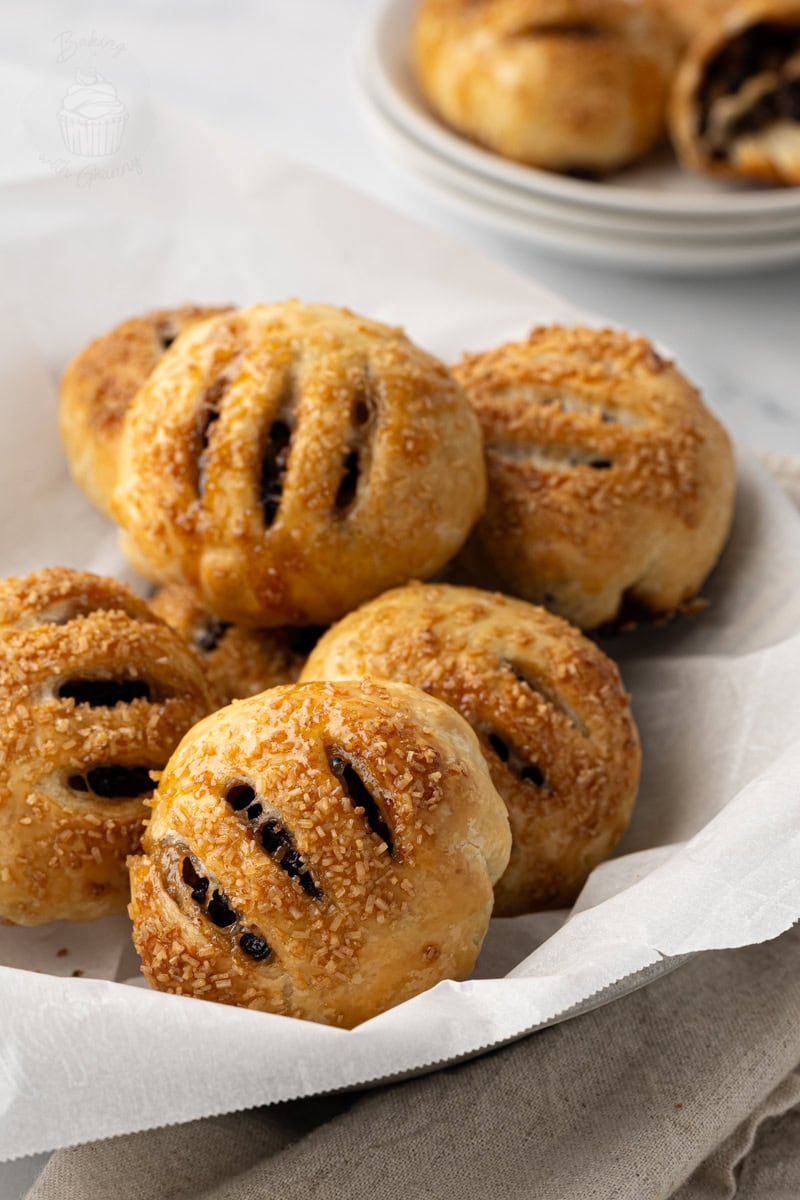
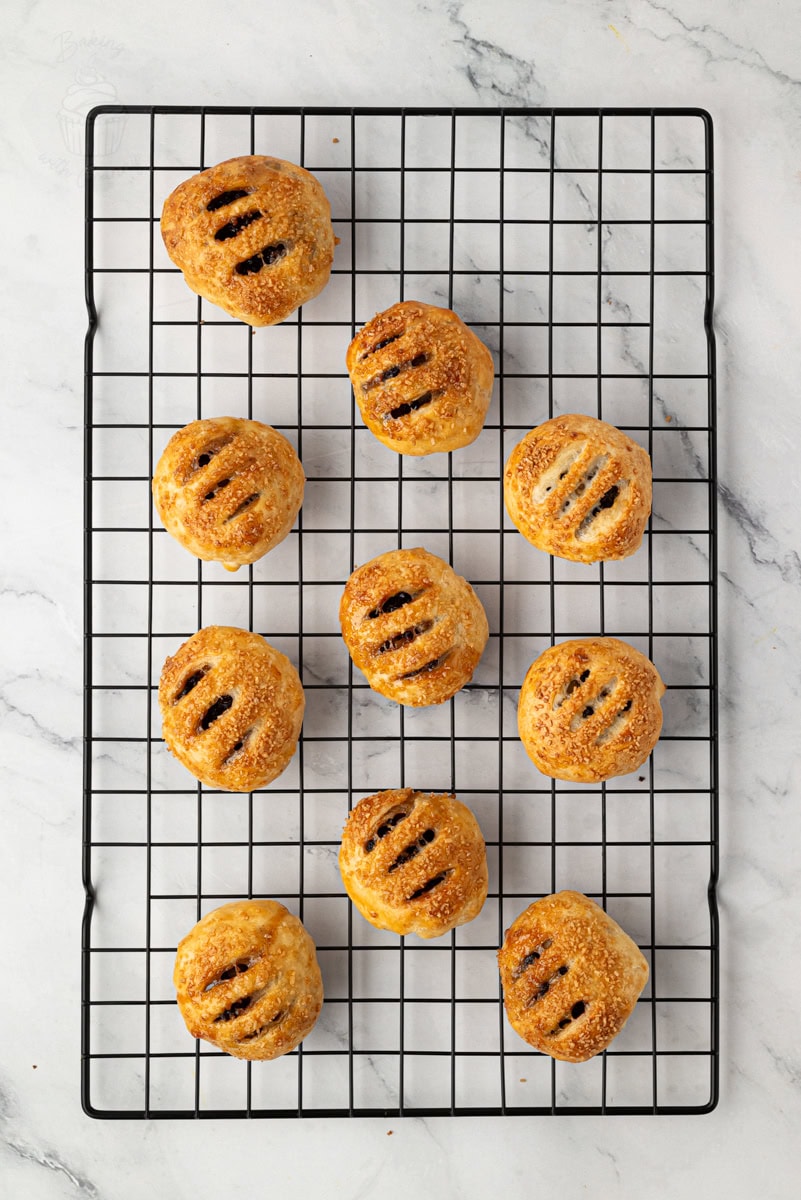
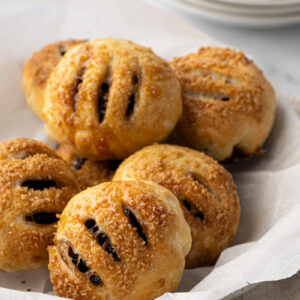
Flaky, buttery pastry wrapped around a sweet, spiced currant filling – these traditional Eccles Cakes are as moreish as they come. Made with ready-roll puff pastry, they’re a classic British bake which is surprisingly easy to make at home.
Summarise & Save this Recipe on:
Summarise & Save this Recipe on:
Where is Eccles and what’s the hype?
Eccles Cakes are one of those classic British bakes that feel like they have been around forever and a day – and actually, they nearly have. Named after the town of Eccles in Greater Manchester, these little currant-filled pastries date all the way back to the 18th century and have remained a staple in British bakeries ever since.
They are still just as popular today, too, with some bakeries having daily queues at their doors of people hoping to grab one. Thankfully, you can also easily find them in supermarkets across the UK. So understandably, it’s been one of the most requested recipes here on Baking with Granny. And believe me, once you’ve had a good one, especially a homemade Eccles Cake, you’ll understand why they are so well loved.
What even is an Eccles Cake?
At their core, Eccles Cakes are simply flaky puff pastry wrapped around a sweet, spiced currant filling. And while you can make puff pastry from scratch, let’s be honest, most of us don’t have the time (or the patience) for all that. Using ready-rolled puff pastry keeps things simple and quick while still giving you that beautifully crisp, golden finish.
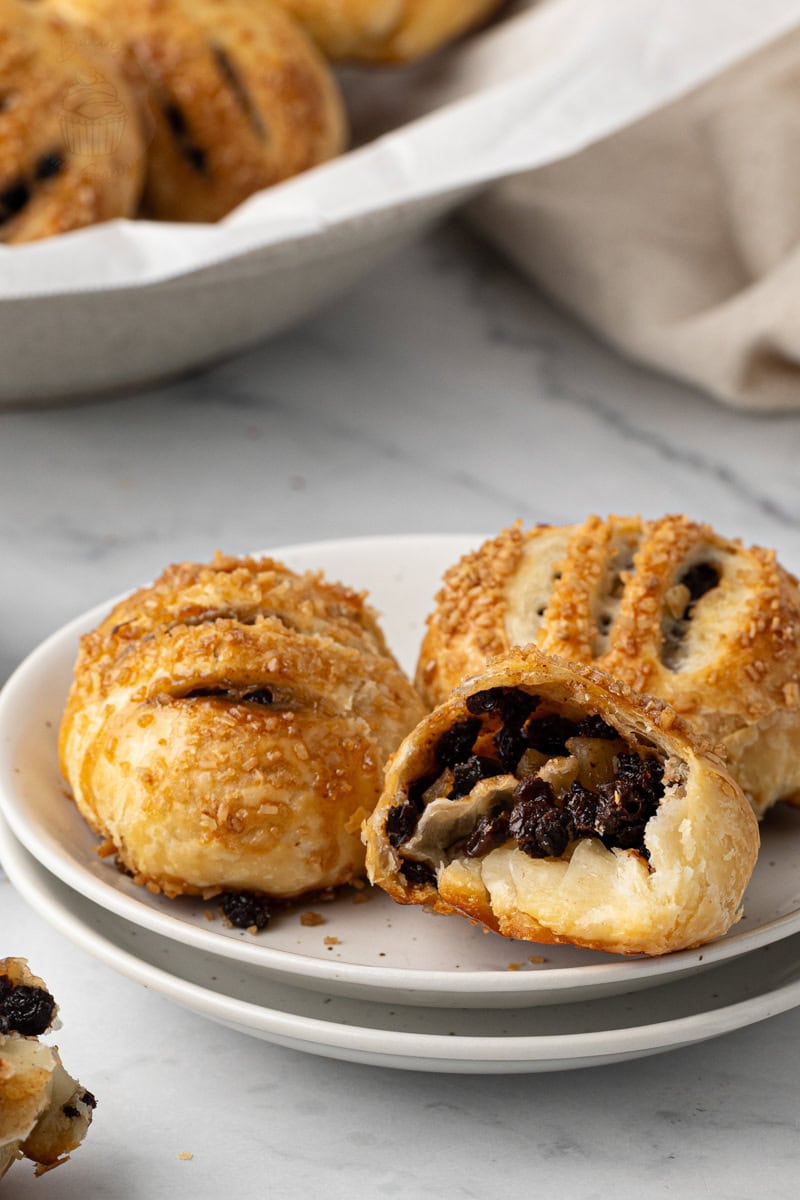
The filling is where all the magic happens! Currants, mixed peel, sugar and a wee bit of spice – all come together to create that signature rich, slightly sticky centre. If you’re a fan of something like a good old Fruit Slice or even Dundee Cake, you’ll undoubtedly love an Eccles Cake.
And fair warning – these are dangerously moreish. One is never quite enough, especially when they’re still a little warm, and the pastry is at its flakiest.
Whether you were lucky enough to have grown up with them, or you’re trying them for the first time, Eccles Cakes are a real bit of baking history here in the UK, one that’s still going strong today – and are well worth baking at home.
Free-from & Vegan
Gluten-free: To make gluten-free Eccles Cakes, you can use a gluten-free puff pastry instead of regular puff pastry. Jusrol do a great Gluten-free Puff Pastry that you can get in most big supermarkets.
Nut-free: There are no nuts used in this Eccles Cakes recipe, but as always, be sure to double-check your individual ingredients allergens list.
Dairy-free:
To make dairy-free Eccles Cakes, use a dairy-free puff pastry and a dairy-free margarine/butter in the filling. Most shop-bought puff pastry is already dairy-free, but it’s always best to double-check the ingredients.
Vegan:
To make vegan Eccles Cakes, use a dairy-free puff pastry and margarine, and glaze with a plant-based milk instead of egg. The filling itself is naturally vegan, so no other swaps are needed.
N.B. Any advice or suggestions to make recipes “free-from” or vegan are purely that – suggestions. Please be careful to double-check all ingredients individually, taking extra caution when serving to those with allergies & intolerances.
For more info on common food allergies, please see food.gov.uk | For more info on coeliac disease, please see coeliac.org.uk | For more info on a vegan diet, please see vegansociety.com
Tips for homemade Eccles Cakes
- Shop-bought Puff Pastry: There’s no need to make puff pastry from scratch here. A good quality ready-roll puff pastry works perfectly and saves a lot of time and effort.
- Use a Cutter or a Small Plate: A 10cm round cutter is ideal for Eccles Cakes, but a small plate or bowl works just as well for cutting your pastry circles if you don’t already have a cutter.
- Don’t Overfill the Pastry: It can be tempting to pack in as much filling as possible, but too much can cause the cakes to burst open in the oven. A heaped teaspoon per cake is plenty – trust me!
- Seal the Edges Properly: Make sure you pinch the pastry together well to fully enclose the filling. This helps keep everything inside while baking and gives you that neat, rounded shape.
- Always Bake Seam-side Down: Flipping the cakes over before baking helps them keep their shape and prevents the sealed edge from opening up while in the oven.
- Score the Top After Glazing: A few small cuts on top allow steam to escape while baking, helping the pastry stay crisp rather than soggy. Just be sure to do this after glazing with egg/milk; glazing after scoring will seal your cuts again.
- Don’t Skip the Sugar Topping: A sprinkle of sugar before baking gives that classic crunch and slight caramelisation on top – it’s part of what makes an Eccles Cake an Eccles Cake!
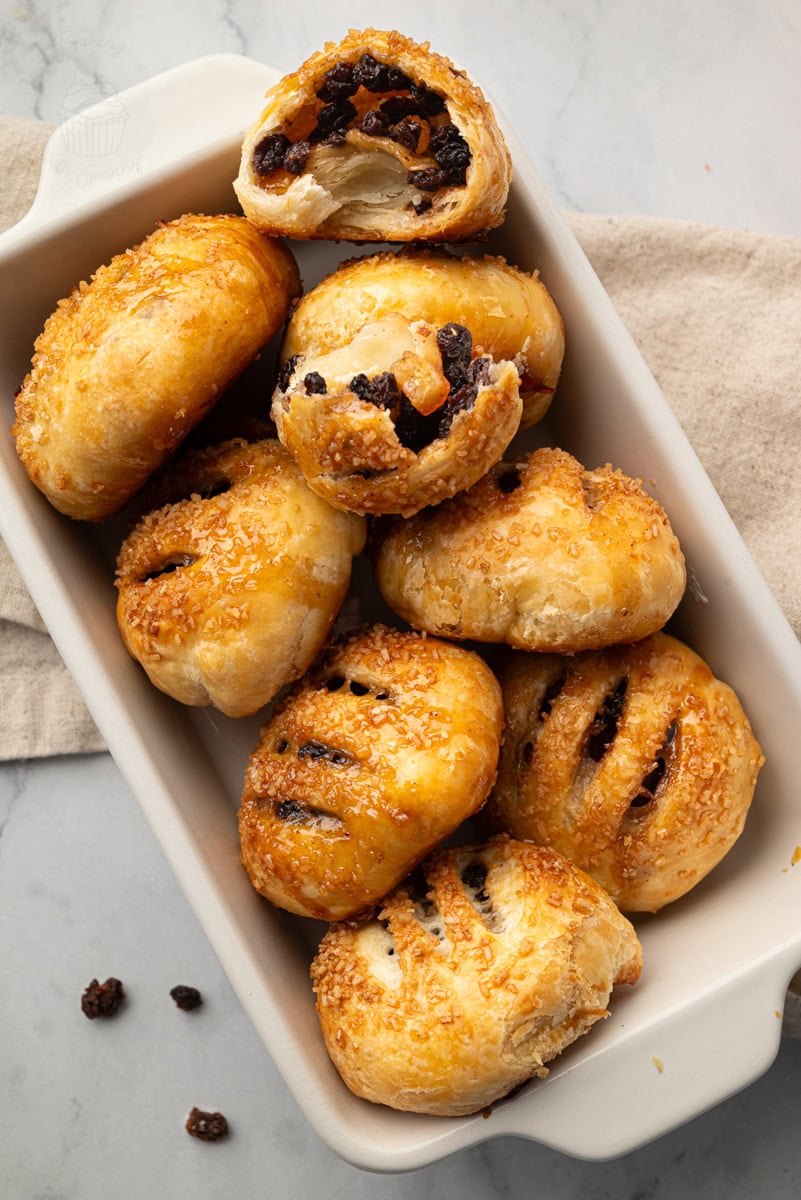
With thanks to Naomi Seiler for creating these photos.
Eccles Cakes FAQs
Eccles Cakes are a traditional British bake made from flaky puff pastry filled with a sweet, spiced mixture of currants, sugar and mixed peel. They are known for their crisp, golden pastry and rich, slightly sticky centre.
Eccles Cakes are named after the town of Eccles in Greater Manchester, where they are said to have originated in the 18th century.
Eccles Cakes are made by filling circles of puff pastry with a spiced currant mixture, sealing them into small parcels, then baking until golden and crisp. Using ready-roll puff pastry makes them quick and easy to prepare at home.
Yes! And it’s the easiest way to make them at home. Using ready-roll puff pastry saves time and effort, while still giving you that crisp, flaky finish that Eccles Cakes are known for.
The small cuts on top allow steam to escape while baking. This helps keep the pastry crisp and prevents the cakes from bursting open.
Yes!. For best results, freeze Eccles Cakes unbaked and cook straight from frozen, adding a few extra minutes to the baking time.
No, although they are similar. Eccles Cakes use flaky puff pastry and have a crisp texture, while Chorley Cakes are made with shortcrust pastry and are flatter and softer, often eaten with some butter or cheese on top.
More Classic British Bakes
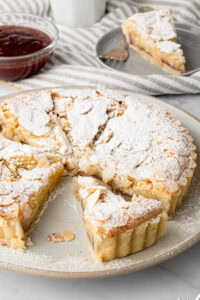
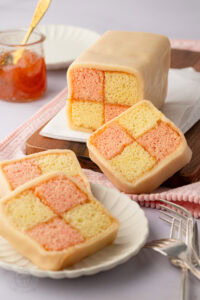
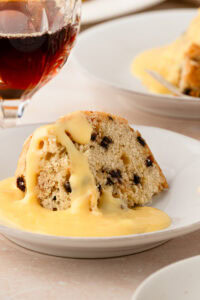
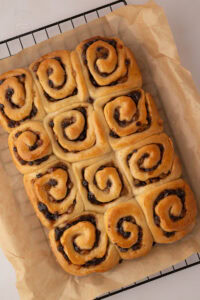
If you loved these easy Eccles Cakes, here are some more of my favourite British baking recipes for you to try next:
Save this recipe!
Want to save this recipe for later? Pop your email below and come back to it when you’re ready to bake.
Eccles Cakes
INGREDIENTS
- 320 g Ready-roll Puff Pastry (usually 1 pack)
- 75 g Block Margarine or Butter
- 175 g Currants
- 50 g Dried Mixed Peel
- 50 g Demerara Sugar
- 1 tsp Ground Cinnamon
- ¼ tsp Ground Nutmeg
- Beaten Egg or Milk (for glazing)
EQUIPMENT
INSTRUCTIONS
- Preheat your oven to 200°C (180°C for fan-assisted ovens, Gas Mark 6 or 400°F). Line a couple of baking sheets with greaseproof paper, then set them aside.
- In a large pan, melt the margarine/butter. Remove from the heat before adding the currants, mixed peel, sugar and spice. Mix together until combined, then set aside to cool, while you prepare the pastry.
- If using ready-rolled pastry, simply roll it out on a work surface. If not using ready-rolled, roll your pastry to about 3mm thick. Using a 10cm round cutter (or a small plate as a template), cut your pastry to make 9-10 circles, folding and re-rolling the pastry offcuts as required.
- Add around a heaped tablespoon of the currant mixture to the centre of each, evenly dividing it between the pastry circles, leaving a little space around the edges of the pastry.
- Dampen the edges of the pastry with a little water, then stretch and pinch the edges inwards together to seal until all the currant mixture is contained in a little parcel.
- Flip the pastry over and place the Eccles cake, pinched side down, on your pre-lined baking sheet. Brush with a little beaten egg or milk, before scoring a few lines on top and sprinkling with a little excess sugar.
- Bake in your preheated oven for 18-20 minutes, or until they are golden brown.
- Remove from the oven and allow them to cool a little before transferring to a wire rack to cool completely.
IMPORTANT NOTE:
All my recipes are developed using a digital scale and the metric system (grams and millilitres). Cup measurements are available as a conversion, but these, unfortunately, won’t always be as accurate. For best results, I always recommend baking with a digital scale.
RECIPE NOTES:
- Currants: If you aren’t a fan of currants or have other dried fruit to use up, you can use any combo of dried fruits – just be sure to use the weight over all weight.
- Mixed Peel: If you don’t have dried mixed peel, you can replace it with extra currants or raisins. To resemble the flavour the mixed peel gives, try adding a little orange zest to the filling.
- Sugar: I like to use Demerara sugar for both flavour and texture, but you can swap it for granulated or caster sugar, should you prefer.
- Glazing options: You can use either beaten egg or milk to glaze your Eccles Cakes. Egg gives a slightly deeper golden colour, while milk gives a lighter finish.






ABOUT THE AUTHOR
Amy Beth Reid
Amy Beth Reid is an award-winning food blogger, mother, wife and cookbook author. Inspired by her childhood in the kitchen with her Mum – a professional baker and her children’s Granny – Amy now shares her tried-and-tested traditional home baking recipes with bakers of all abilities around the world. She lives in Scotland with her husband, two sons and her small pack of Siberian huskies.